Softness in Bedroom Design: Materials, Colour and Comfort
How rounded edges, visual weight and breathable materials, not just thicker padding, bring calm to small Hong Kong bedrooms through 'softness psychology'.
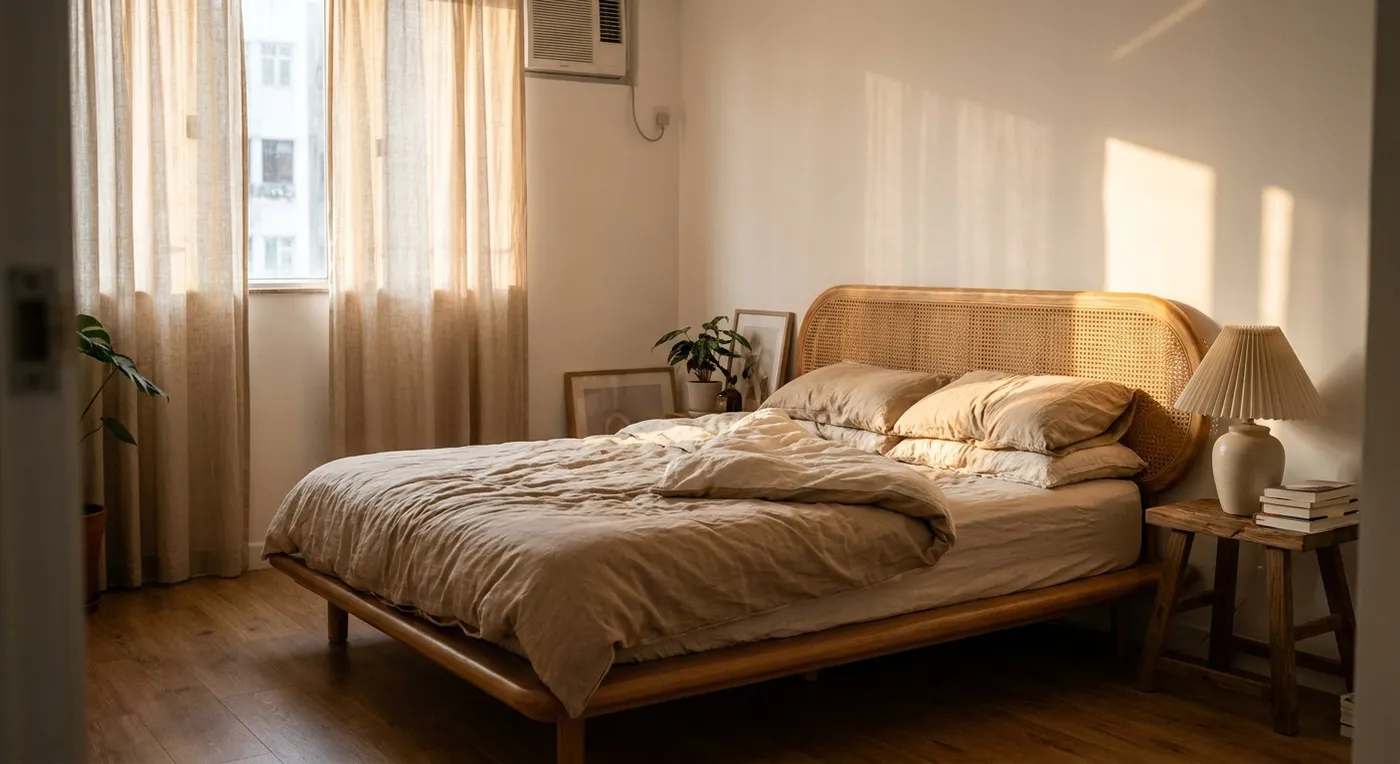
Nobody would argue that sleep calls for a sense of softness. But why does a rounded headboard or a frosted lampshade relax you more than an extra-thick mattress? The answer lies in what we might call “softness psychology”: the texture and visual weight of an object directly affect our nervous system. In Hong Kong’s dense, small-bedroom environment, we need to use soft design more intelligently, not chase thick padding and plush fabric for its own sake.
1. Rounded Corners and Visual Weight: You Do Not Need a Wall of Cushions
An object’s “visual weight” (the sense of stability its shape and material give off) matters here. Hong Kong bedrooms tend to be small, and furniture with sharp, angular edges reads as visually tense in a confined space. A headboard with rounded corners, or a low-profile bed frame like the low frame on the Violette Bed, makes a room feel more grounded and more secure. The point is not to make everything soft enough to sink into. It is to use proportion and form to create a relaxed atmosphere.
2. Material Breathability: In Hong Kong, “Soft” Means Cool
Breathability matters too (a woven headboard, for example), and this is especially important in Hong Kong’s humid climate. Many people assume soft automatically means velvet or plush upholstery, but velvet absorbs moisture easily, is harder to maintain, and visually makes a small room feel more stuffy. Switching to cane weave, linen, or timber slats keeps that gentle tactile quality while also giving the space more visual breathing room. Around the head of the bed especially, breathable materials cut down on the closed-in feeling, so the air still feels like it is moving while you sleep.
3. A Common Mistake in Hong Kong Bedrooms: Softness Does Not Mean Thickness
Ultimately, softness in bedroom design should strike a balance between visual relaxation and functional practicality. Do not blindly copy the heavily upholstered look of large overseas homes. Instead, work within the real constraints of Hong Kong’s typical 8-foot ceilings and small flats, using rounded forms, breathable materials, and soft lighting to create a rest space that is genuinely your own.
If you are facing a similar design dilemma, please contact our team to discuss your requirements.
Discuss your space
Share your floor plan or photographs for a considered assessment of design possibilities, practical constraints and budget.