OSB Material Aesthetics: From Industrial Use to Interior Design
The texture, manufacturing logic and restrained residential application of oriented strand board.
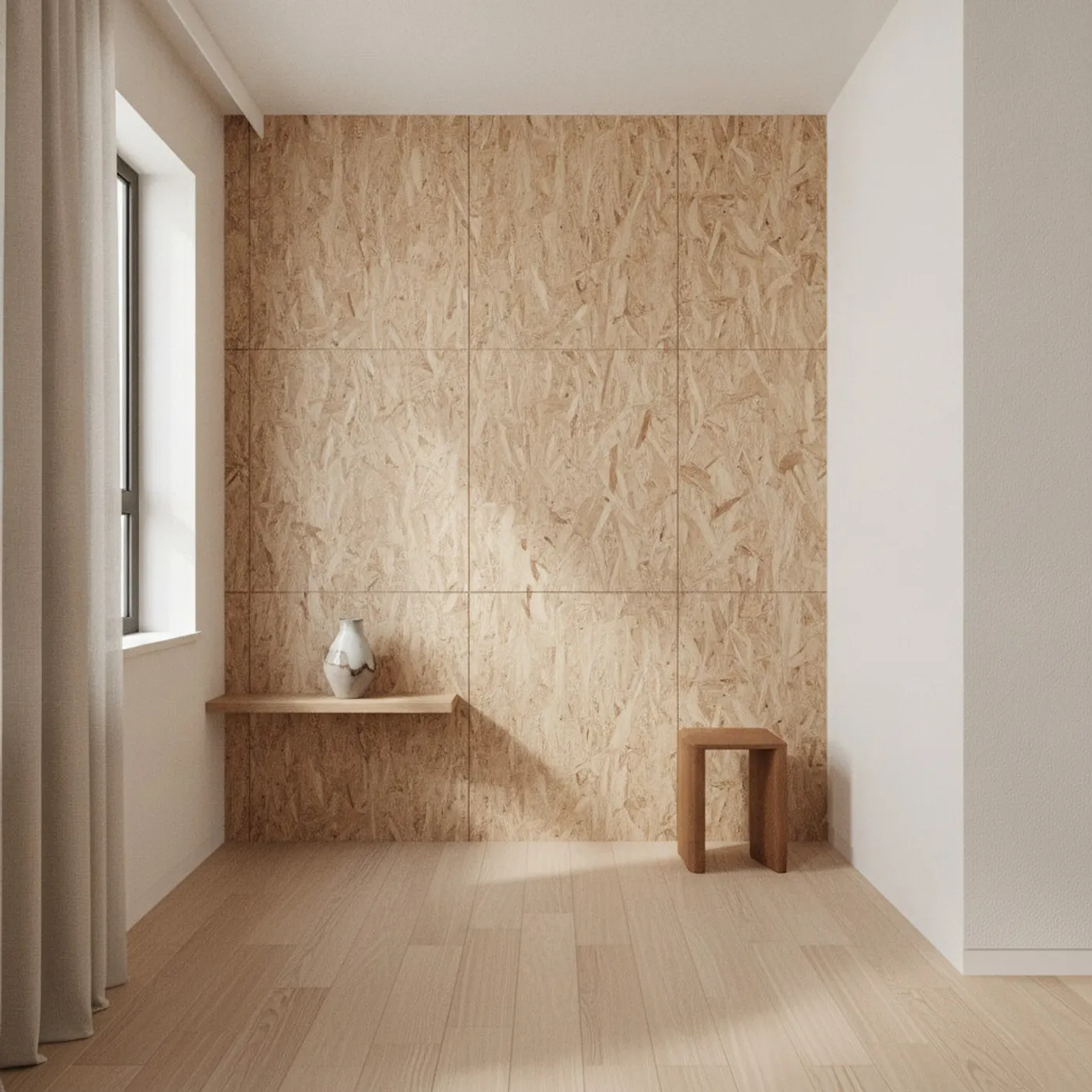
An artist’s studio combined exposed OSB walls with white surfaces. The visible timber strands retained the material’s character and introduced natural variation.
A material developed for construction
Oriented strand board emerged in North America during the 1960s and 1970s. Cross-oriented timber strands are bonded with resin and pressed into boards used for subfloors, wall sheathing and roof substrates.
A material once concealed within construction has gradually become part of the visible design language.
Expressing material character
Frank Lloyd Wright’s approach to truth to materials valued the inherent qualities of stone and timber. The rough stone walls of Fallingwater illustrate this thinking. Exposed OSB similarly makes its composition and manufacture visible.
Texture and wabi-sabi
Wabi-sabi considers time, natural processes and imperfection. The irregular strands make each board different from a uniform finish.
Application in Hong Kong homes
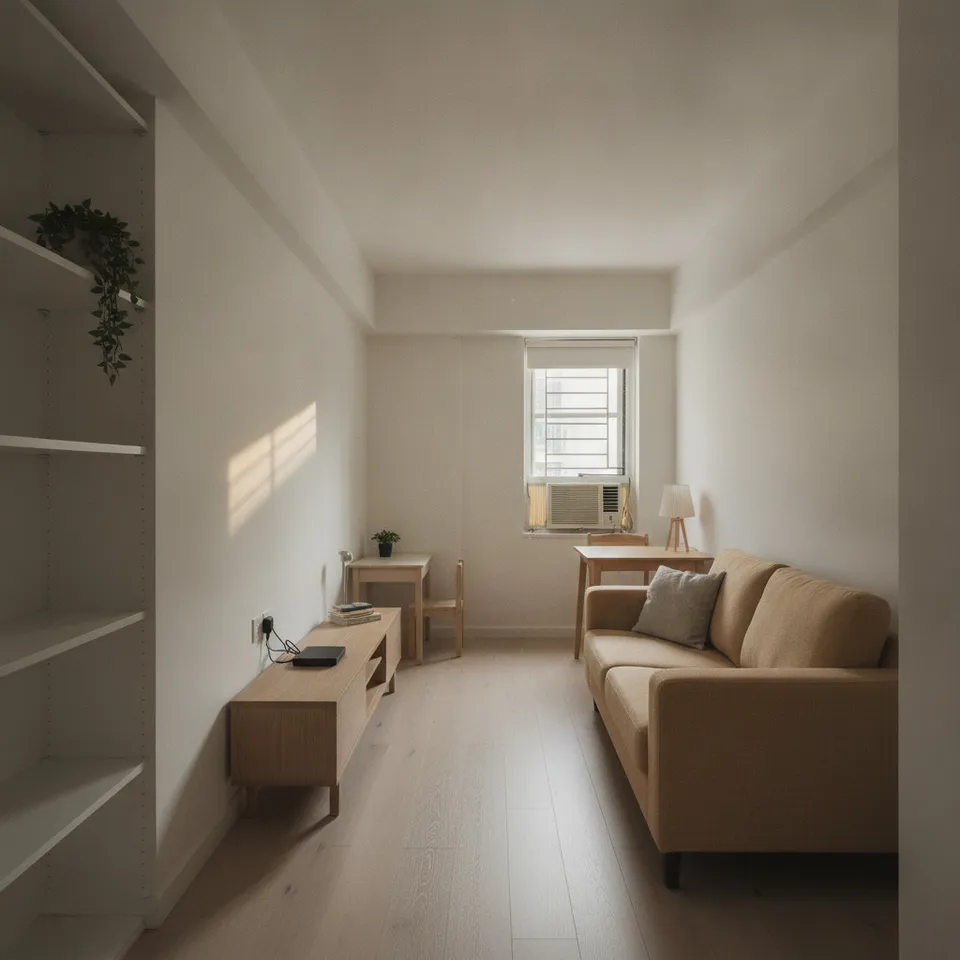
Humidity and residential conditions require assessment. Beneath an eight-foot ceiling, OSB might be concentrated on a television wall or counter front, balanced with lighter walls and open space. Please discuss suitable material proportions and locations with our team.
Discuss your space
Share your floor plan or photographs for a considered assessment of design possibilities, practical constraints and budget.