YOHO Midtown: Material Selection and Conditions of Use
An objective look at common material myths for YOHO Midtown renovations (solid wood flooring, wallpaper versus paint, and kitchen cabinet doors), weighed for durability and upkeep.
Every owner who walks into a YOHO Midtown unit has the same first question: what materials should the renovation use? Between flooring, kitchen cabinets, and wall finishes, the choices are dizzying, and with so much conflicting information online, it is easy to get pulled along by myths like “material X is always the best.” As a designer, I tell clients constantly: there is no perfect material: only the choice that fits how you actually live. This is not a sales pitch. I just want to share a few material myths that come up often at YOHO Midtown, to help you think it through objectively.
Myth 1: Is Solid Wood Flooring Always Better Than Engineered Wood?
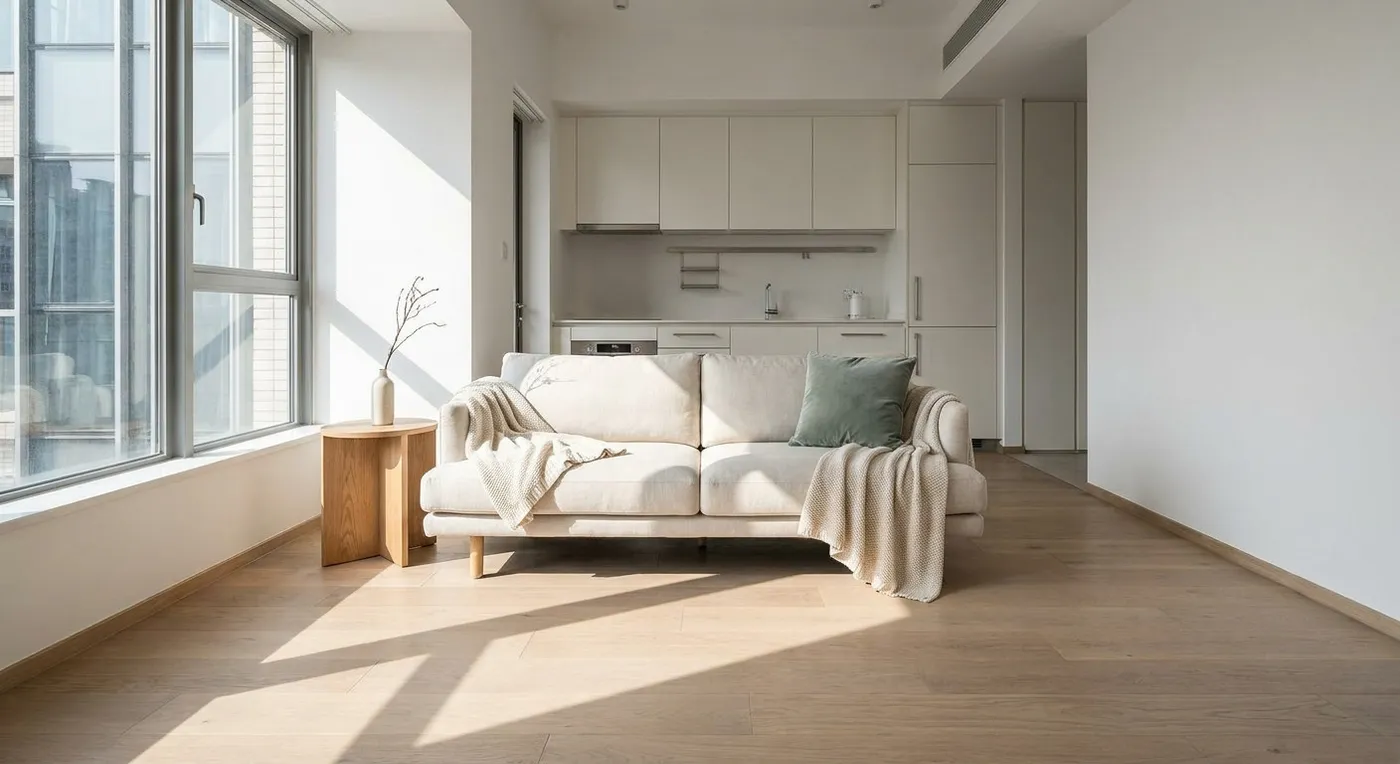
Many people feel solid wood flooring is more “premium”: it looks good and holds its value. But in a standard-ceiling unit like those at YOHO Midtown, solid wood typically needs 15-20mm of thickness, and if the subfloor is not perfectly level, or the weather turns humid (especially in the Yuen Long area), you can easily end up with gaps or warping down the line. Modern engineered wood flooring, by contrast, achieves a very similar wood-grain look with much better stability, and at a more accessible price. I am not saying solid wood is bad, but if you have kids or pets at home, or do not want to spend much time on maintenance, engineered wood may be the more practical choice.
Myth 2: Must Walls Be Painted, Since Wallpaper Moulds Easily?
It is true that wallpaper is more vulnerable to damp, but many of today’s non-woven wallpapers are far more breathable, some are even designed specifically for Hong Kong’s climate. Another option is microcement or artistic plaster finishes, which look stylish but demand skilled installation and can be a hassle to patch later. Paint is the safest bet, but does that mean dull, limited colours? Not really: many brands now offer extensive colour cards and textured finishes, so it does not have to mean monotony. The real question is: how much time are you willing to spend on maintenance? Wallpaper typically needs replacing every 5-8 years, while paint can last a decade, but changing a wallpaper pattern costs a bit more than repainting. These trade-offs really depend on how long you plan to live there.
Myth 3: Is Tempered Glass the Most Hard-Wearing Choice for Cabinet Doors?
Tempered glass cabinet doors are genuinely scratch-resistant and easy to clean, but in the open-plan kitchens common at YOHO Midtown, the reflective surface tends to expose any clutter inside. There is also a risk of shattering at the corners if knocked hard enough, even though safety glass shatters into small, blunt fragments. Matte lacquered panels have a nicer texture but scratch more easily. Laminate is the most economical and practical option, with plenty of styles to choose from. Its one drawback is that the seams do not hold up as well to heat. My advice: if your cooking produces a lot of oil and fumes, go with glass; if you care more about a unified colour scheme, lacquer or laminate is worth considering, but expect some wear after a few years.
The Bottom Line
Remember, there is no single material choice that suits everyone. If you are facing a similar design dilemma, please contact our team to discuss your actual needs, and we can work through it objectively together.
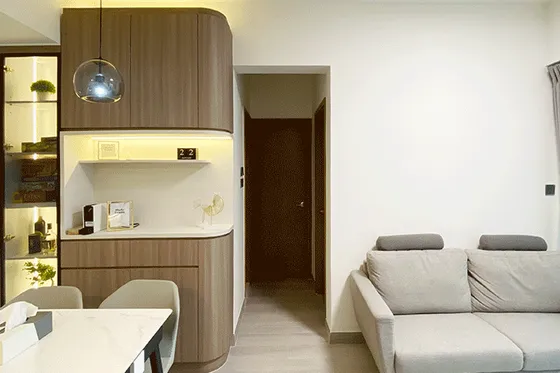 Yoho Midtown Floor area within our project portfolio View project
Discuss your space
Share your floor plan or photographs for a considered assessment of design possibilities, practical constraints and budget.