Reading Corners in Compact Spaces: Aluminium and Timber
Drawing on Danish architect Nikolaj Mentze's open bookstore corner, this piece weighs aluminium shelving against wood display cabinets for building a reading nook in a small Hong Kong flat.
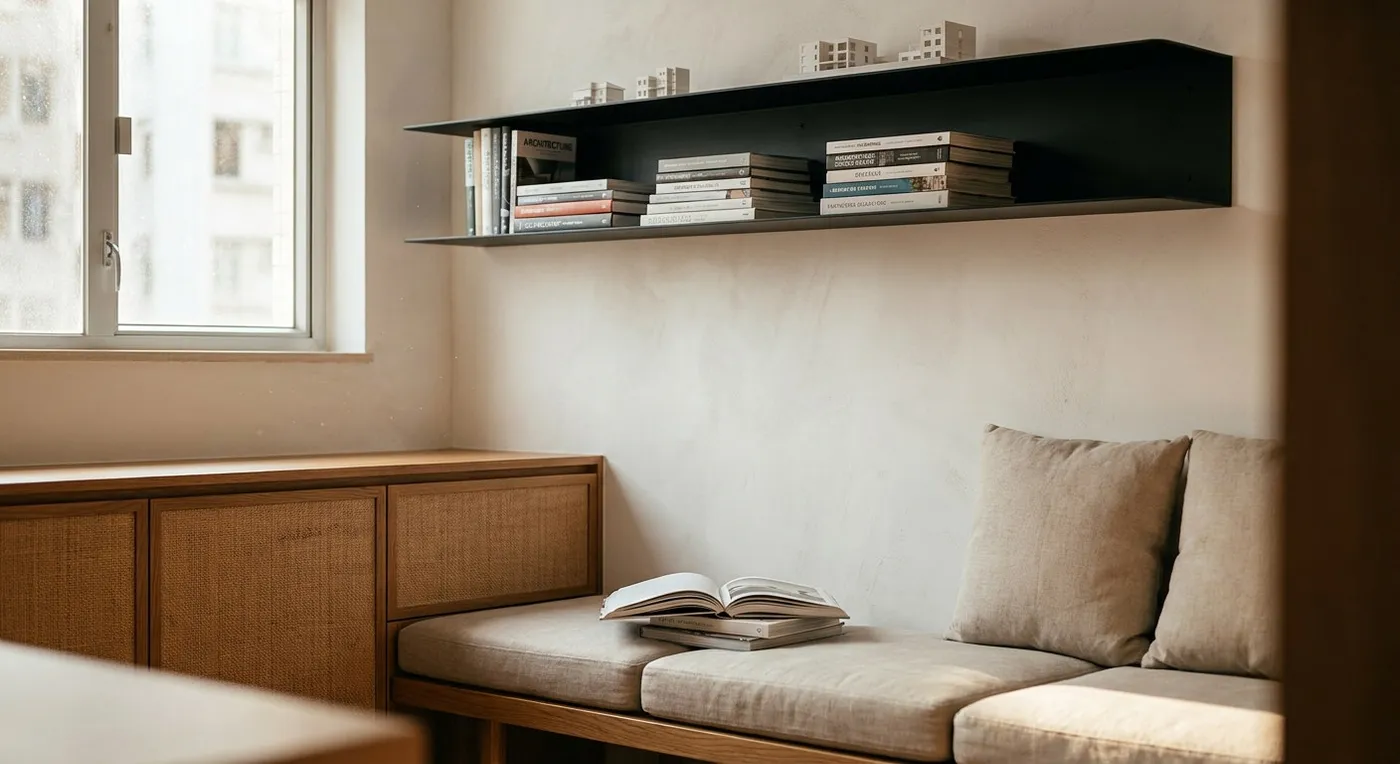
Danish architect Nikolaj Mentze built a small public-facing architecture bookstore into the Cobe studio: not a flagship shop, just a bench, a few aluminium shelving units, and a wood-framed cabinet, positioned right at the entrance. Together, they create a space to pause, read and converse.
The idea, “a threshold that spills out to the street,” is genuinely useful for Hong Kong owners who want to carve a semi-public reading corner out of their home or small shop. But with typical Hong Kong flats running an 8-foot ceiling and a hundred-odd square feet, how do you achieve a feeling that is both calm and welcoming with limited materials? Here, CLAY takes an objective look at the practical trade-offs between two common display materials: aluminium shelving and wood cabinetry.
Aluminium shelving: light and flexible, but watch for a “cold” feel and noise
Mentze used aluminium shelving for the upper bookshelf. Its biggest advantage is that it is lightweight and lets light through, so it does not crowd a small space, and it resists moisture and insects, which suits Hong Kong’s rainy season well. The downside is that it can feel cold and unwelcoming, which makes visitors less inclined to relax. Books placed on it also tend to clatter, which disrupts the calm atmosphere you are going for.
Wood display cabinets: warm and versatile, but bulk eats into space
In the original project, the wooden display cases are the space’s source of warmth. Wood can be shaped into curves and angled surfaces, letting books be displayed at different angles for visual interest. But its bulk eats into floor space, and in a Hong Kong flat measuring a hundred-odd square feet, every inch counts.
Mixing the two materials: how do you make the transition feel natural?
The aluminium shelves and wood-framed cabinets in the original project are a good example of how to combine them: aluminium for the upper shelving (light, letting light through), wood for the lower or side display (heavier, more grounded). Visually, you can align them along the same horizontal line, or echo the aluminium’s tone with a matching wood grain colour.
The key is not to mix materials just for the sake of mixing them. If a space is already very small, sticking to a single material can actually feel more cohesive. Mentze combined aluminium and wood because his bookstore has an entire foyer’s worth of space to play with contrast. For a small Hong Kong flat, I would suggest picking just one focal zone to accent with a second material: a single wood cabinet door, say, or one aluminium shelf.
The bench in the reading corner matters too: the long wooden bench in the original project lets visitors sit down and read at leisure. In a Hong Kong home, that could become a window-sill cushion (if the sill is deep enough), or a slim custom stool with a foldable seat. One note: leave ample clearance between the seat and the lowest shelf above it, so nobody bangs their head when sitting down or standing up.
In short, aluminium suits anyone chasing a “gallery” feel who is wary of humidity; wood suits anyone who wants a cosy warmth and is willing to give up a little space for it. Get the material choice and installation details right, and even a 2-foot-wide recess can become a miniature community gathering spot that invites people to linger.
If you are wrestling with a similar design dilemma, please contact our team to discuss your requirements.
Discuss your space
Share your floor plan or photographs for a considered assessment of design possibilities, practical constraints and budget.