Converting a Hong Kong Balcony into a Terrace: An Honest Look at Faux-Terracotta Tile, Timber, and Silicate Paint
A Spanish holiday home in Fonolleres frames how faux-terracotta tile, treated timber, and silicate paint perform in humid, high-density Hong Kong terraces.
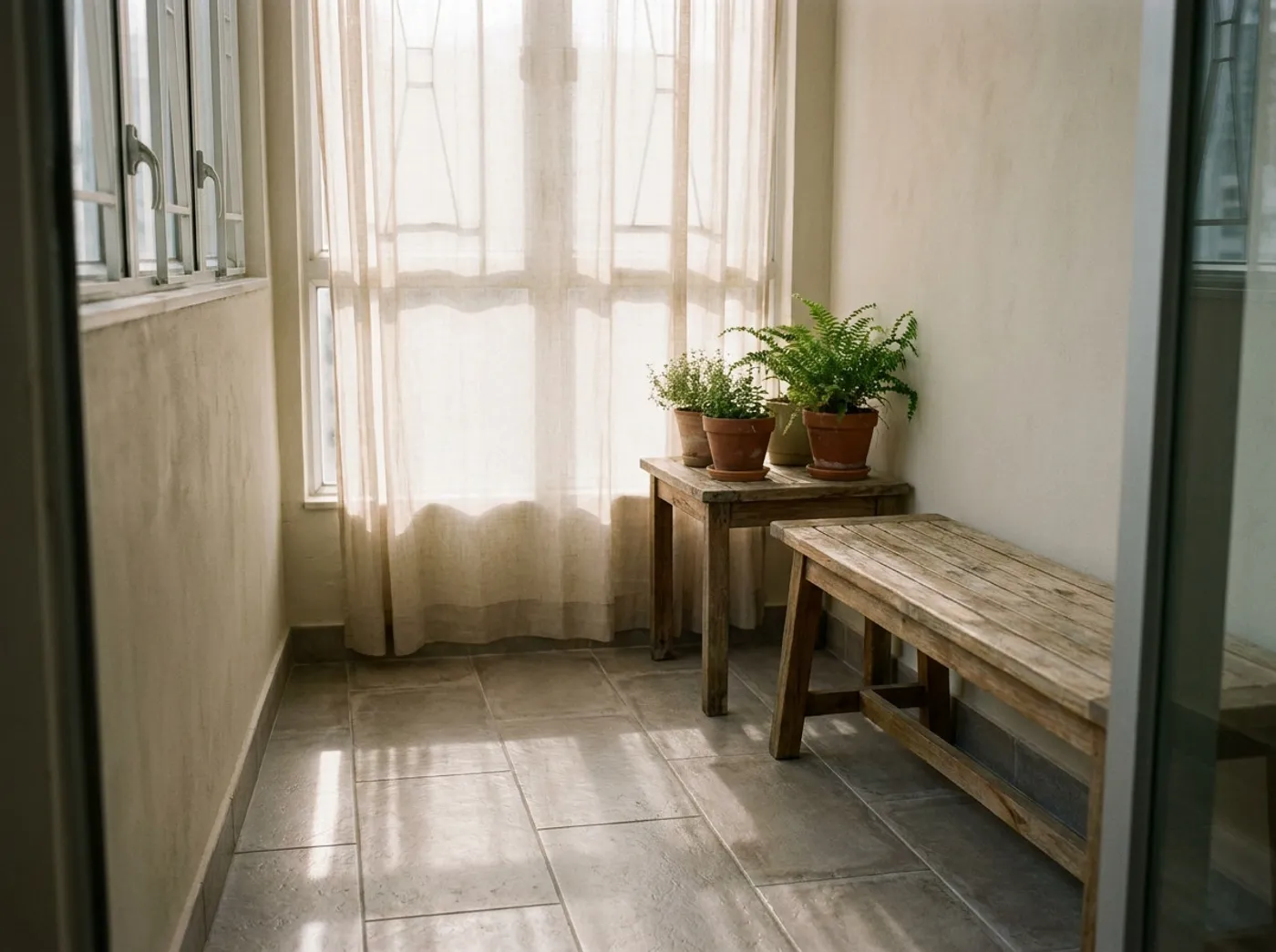
We are always looking at overseas projects, like this holiday home in the medieval Catalan town of Fonolleres, Spain, which added porches, pergolas, and terraces to bring everyday life outdoors. Back in Hong Kong, though, our balconies run to a few dozen square feet at most, with the added challenge of air-conditioning condenser noise from the flats above and below. So how can materials realistically create a similar sense of outdoor extension? Rather than abstract ideas, the CLAY design team breaks down three common materials (faux-terracotta tile, treated timber, and silicate paint) and how they really perform under Hong Kong’s high-density conditions.
Material Inspiration from the Spanish Project
The Spanish project used terracotta bricks, timber, and silicate paint, with tones that blend into the local ochre stone architecture for a cohesive, monochromatic palette. Most of the original structure was kept in place, cutting down on construction waste: a principle that holds up just as well in Hong Kong. But Hong Kong’s humid, rainy climate means many materials need to be reassessed before they are brought over.
Material Constraints and Solutions for the Hong Kong Environment
The following three materials are what we most often recommend to homeowners, and also where things most often go wrong. There is no perfect material, only the one that best fits how you actually live.
In short, these materials can borrow the “monochromatic harmony” idea from the Spanish project: pairing light grey faux-terracotta tile with a silicate paint in a matching tone, say, then adding timber furniture as an accent. But keep in mind that Hong Kong balconies usually have to deal with air-conditioning condenser heat and cooking fumes drifting over from nearby kitchens, so stain resistance and ease of cleaning should be the top priority. Any balcony conversion that affects the structure, external walls or loading should also be assessed by a qualified professional and, where required, approved by the Buildings Department. If you are facing a similar design dilemma, our team can help assess your options.
Inspiration: design blog Dezeen, “Anna and Eugeni Bach extends Fonolleres House with porches and pergolas,” by Amina Amber.
Original article: https://www.dezeen.com/2026/06/25/fonolleres-house-extension-anna-eugeni-bach-catalan-spain/
Discuss your space
Share your floor plan or photographs for a considered assessment of design possibilities, practical constraints and budget.