Design's Art of Camouflage: What the Orchid Mantis Teaches Us About Choosing Materials
Taiwanese label JOUISSANCE's orchid-mantis-inspired collection shows why material choice must weigh texture, upkeep, and space, not looks alone.
I recently read about Taiwanese emerging design label JOUISSANCE being shortlisted for Spain’s BIAAF international fashion competition. Their collection, BEAUTY AS CAMOUFLAGE, is built around the biological logic of the orchid mantis’s mimicry: on the surface, a soft, delicate orchid; hidden within, the predatory tension of the mantis. It reminded me of something clients ask all the time: why does a material look great in photos, then feel wrong once it is installed? The underlying principle turns out to be a lot like camouflage itself.
Breaking the Myth: Choosing Materials Is Not About “Prettiest Wins”
A classic mistake in interior design is choosing materials purely for visual impact, while ignoring how texture actually interacts with the surrounding space. JOUISSANCE, for instance, uses digital printing on jacquard fabric to shift between the real and the illusory: the fabric is reflective like an insect’s exoskeleton, yet still carries a floral motif throughout. The same logic applies in a narrow Hong Kong flat, especially with a standard 8-foot ceiling: reaching blindly for mirrored or high-gloss finishes to “fake” a bigger space can actually tire the eye, and end up exposing the very structural flaws it was meant to hide.
Back to that JOUISSANCE collection: they drew on 1980s Vogue vocabulary (sequins, satin, exaggerated silhouettes) to express gender performance. In interior design, the “gender” of a material can be challenged in much the same way: pairing matte cement render with a velvet sofa, say, or frosted acrylic with matte brass hardware. That kind of friction produces real depth, instead of the flat, showroom-perfect sameness you get otherwise.
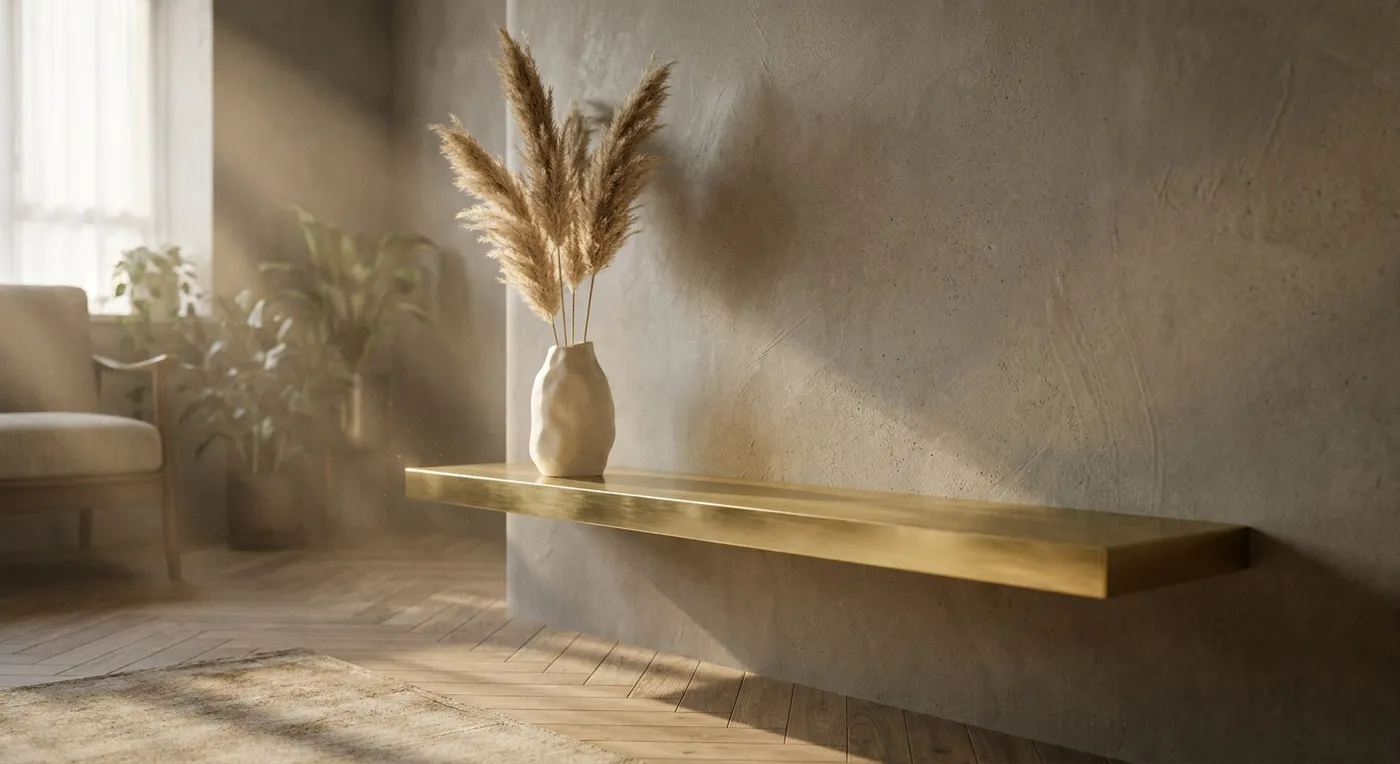
Objectively speaking, every material choice involves trade-offs. High stain-resistance, as with quartz, usually comes at the cost of natural texture; natural stone, like marble, needs regular sealing. There is no perfect material, only combinations that suit the state of a particular space. Most Hong Kong flats are small, so most clients lean toward low-maintenance materials, but if you are chasing real design impact, you can deploy a “high-maintenance but beautiful” material selectively, an accent wall in artisan paint or microcement, say, with everything else kept to durable, practical emulsion.
One last thought: design is not about pretending a space is something it is not. It is about using a material’s own “mimicry” to amplify a space’s real strengths, while staying honest about its limits: that is how you avoid falling into the trap of cheap-looking renovation. If you are facing a similar design dilemma, our team can help assess your options.
Discuss your space
Share your floor plan or photographs for a considered assessment of design possibilities, practical constraints and budget.