Perforated Metal Screens: Ventilation, Shading and Construction
Using India's SpaceDNA screen as a cue, we weigh this passive-cooling material's ventilation, shading, and privacy limits in humid Hong Kong homes.
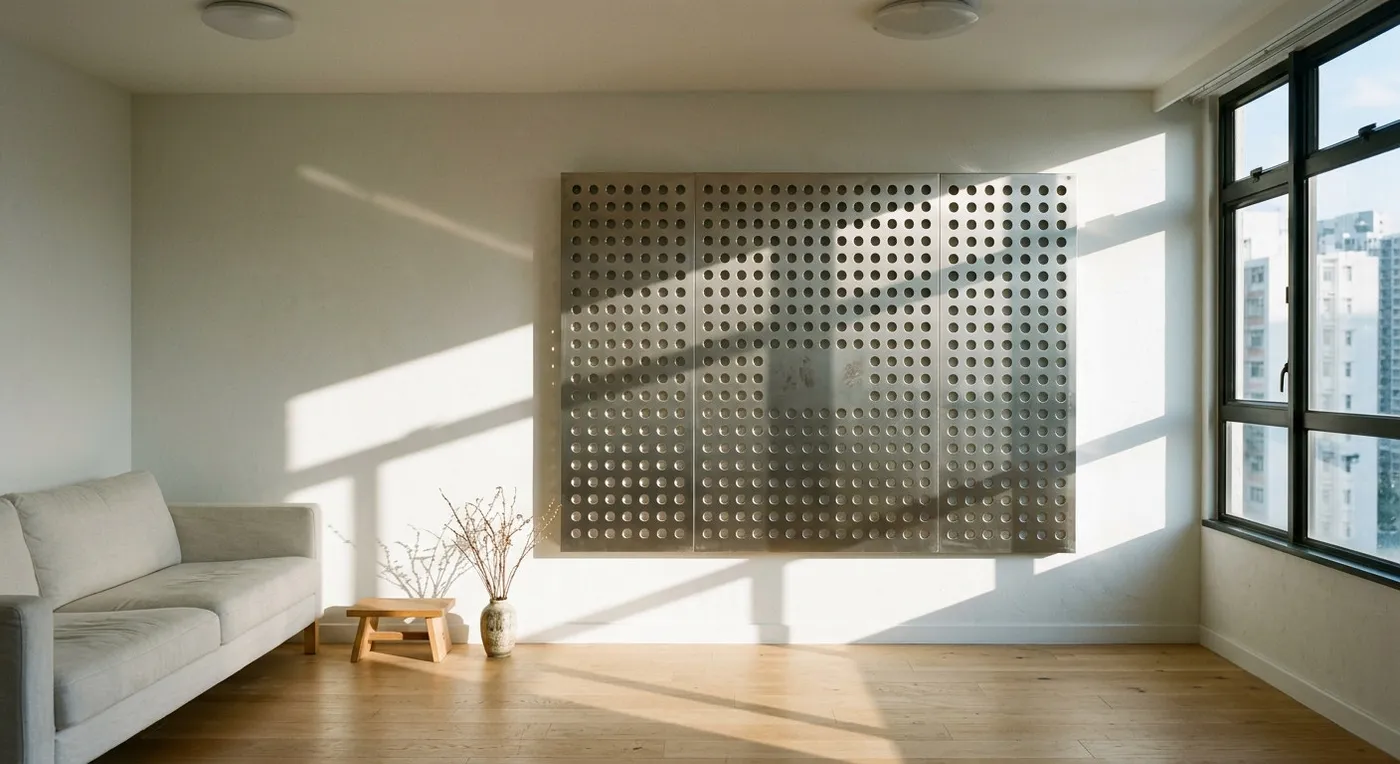
We recently came across Splitscape Residence by India’s SpaceDNA, which uses a large perforated steel screen (a jaali) to handle southwest-facing daylight, and the result is visually striking. But does this approach suit every home? Particularly in Hong Kong, with its standard 8-foot ceilings and humid, dusty climate? This time, CLAY looks at the material’s real properties against our local climate, weighing the pros and cons objectively and unpacking some common myths.
The Main Advantages of Perforated Metal Screens
In dry, hot climates like India’s, this kind of screen is a genuinely effective passive-cooling tool: it blocks direct sunlight while still allowing air to move through. Bring it to Hong Kong, and while our humidity is far higher, a screen is still a decent lightweight option for west-facing or northeast-facing units where you do not want to rely permanently on heavy curtains or round-the-clock air conditioning. It works particularly well in open-plan kitchens or corridors, guiding airflow and creating light-and-shadow effects more flexibly than a solid partition. A screen installed on an external wall, window or balcony exterior should be assessed by a qualified professional, with Buildings Department approval where required.
Common Myth: Does a Screen Guarantee Privacy?
Many people assume perforated metal means you cannot be seen through at all. The reality: when outdoor light is brighter than indoor light, the screen behaves somewhat like a one-way mirror: you cannot easily be seen from outside. But once the lights go on at night, anyone outside can see straight in. That is why you need a second layer, like blinds or frosted glass, for real privacy. On top of that, a screen’s ventilation performance depends heavily on wind direction: in a unit with windows on only one side, its effect drops off sharply. That is a physical limitation design alone cannot fully solve.
In short, perforated metal screens are a workable design tool in Hong Kong, but the material, perforation ratio, and installation position all need to be adjusted to the specific environment. If you are facing a similar design question, please contact our team to discuss your project.
Discuss your space
Share your floor plan or photographs for a considered assessment of design possibilities, practical constraints and budget.