Terracotta Tile on Walls: The Physical Trade-offs Behind That Woven Texture
Starting from Mandarin Oriental Landmark's interlocking terracotta facade, we examine the weight, installation, and cleaning trade-offs of terracotta wall tile inside Hong Kong homes, plus lighter alternatives.
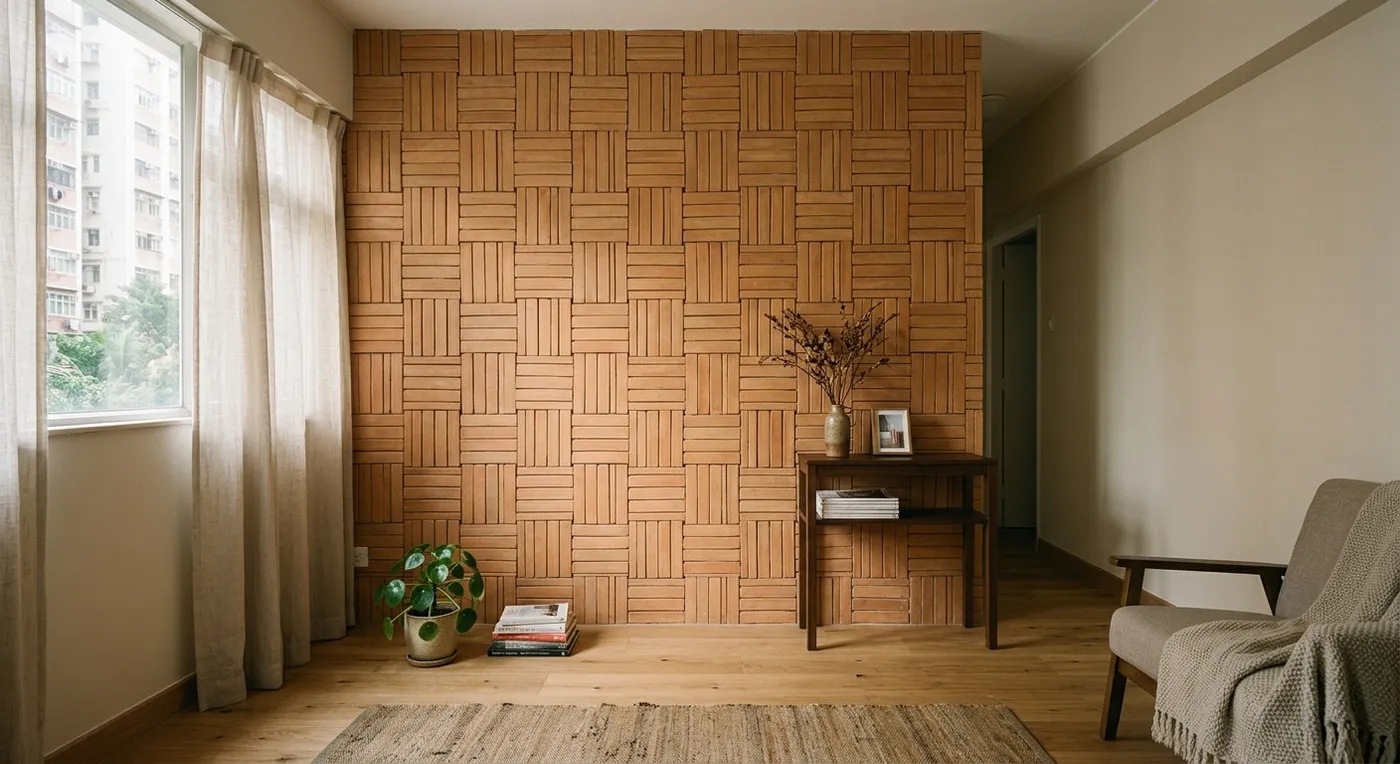
Neri&Hu recently used interlocking terracotta tiles on the facade of Mandarin Oriental Landmark, creating an effect like a woven tapestry. The concept is beautiful, but if you brought this material inside, especially into a high-density Hong Kong home, what would you actually need to consider? This is not a sales pitch; we are simply breaking down the pros and cons of terracotta wall tile from a material and structural-engineering standpoint.
The Material Advantages of Terracotta: Why Designers Love It
Terracotta is fired clay, and its surface can be finished in a range of textures and colours. Its natural matte texture feels warmer than ordinary ceramic tile. It also has good thermal mass, which slows indoor heat gain in summer and helps retain warmth in winter, though that benefit is somewhat diminished in Hong Kong homes that run air conditioning constantly. More importantly, the way the tiles are arranged can mimic woven or textile-like organic patterns, adding real visual depth instead of the flatness of ordinary tile.
Limits and Risks of Terracotta Wall Tile in Hong Kong Flats
First, terracotta is significantly heavier than ordinary ceramic tile. Neri&Hu used it on a commercial building’s exterior facade, where the structure was already engineered to bear that load; the partition walls in a typical Hong Kong home, often brick or lightweight block, may not be able to carry it. The load-bearing capacity of a wall should be assessed by a qualified professional before heavier cladding is added. Installation also requires metal brackets and screw fixings, with a bronze metal support layer beneath every course of tile, and these details eat up meaningful space in a small flat. Then there is cleaning: terracotta’s surface is slightly porous, so it readily picks up dust and cooking grease. Placed in a kitchen or near a window, it will dull and darken over time, and ordinary cleaning products can damage the surface.
An Alternative: Want the Woven Texture Without the Hassle?
You do not actually need real terracotta. Prefabricated fiber cement panels pressed with a woven pattern, or 3D textured ceramic tile that mimics the raised-and-recessed effect, are both much lighter and far simpler to install. If you are genuinely drawn to the texture of terracotta, consider using it sparingly, for instance on a single feature wall, where the smaller area keeps both structural load and cost manageable.
Design has always been a matter of trade-offs: no material is perfect, and what matters most is knowing the effect you are after and being willing to accept its limitations. If you are facing a similar design dilemma, please contact our team to discuss your requirements.
Discuss your space
Share your floor plan or photographs for a considered assessment of design possibilities, practical constraints and budget.