Hempcrete as a Building Material: Lessons from a Portuguese Project
Starting from Portuguese architect Ricardo Leal's hempcrete chicken coop, this piece asks if the eco-material works in Hong Kong's humid climate.
Portuguese architect Ricardo Leal built a “mansion” for a chicken: the Pestana Chicken Coop, made from hempcrete and Japanese cedar, lightweight and designed to be taken apart and reconfigured. His stated philosophy: even the humblest structure deserves careful thought. That attitude lands differently in Hong Kong, a city where every square foot is precious and renovation is a constant exercise in compromise. We are not suggesting you build a chicken coop, but the project is a good excuse to unpack hempcrete as a material, and ask how workable it actually is in a Hong Kong home.
What Exactly Is Hempcrete?
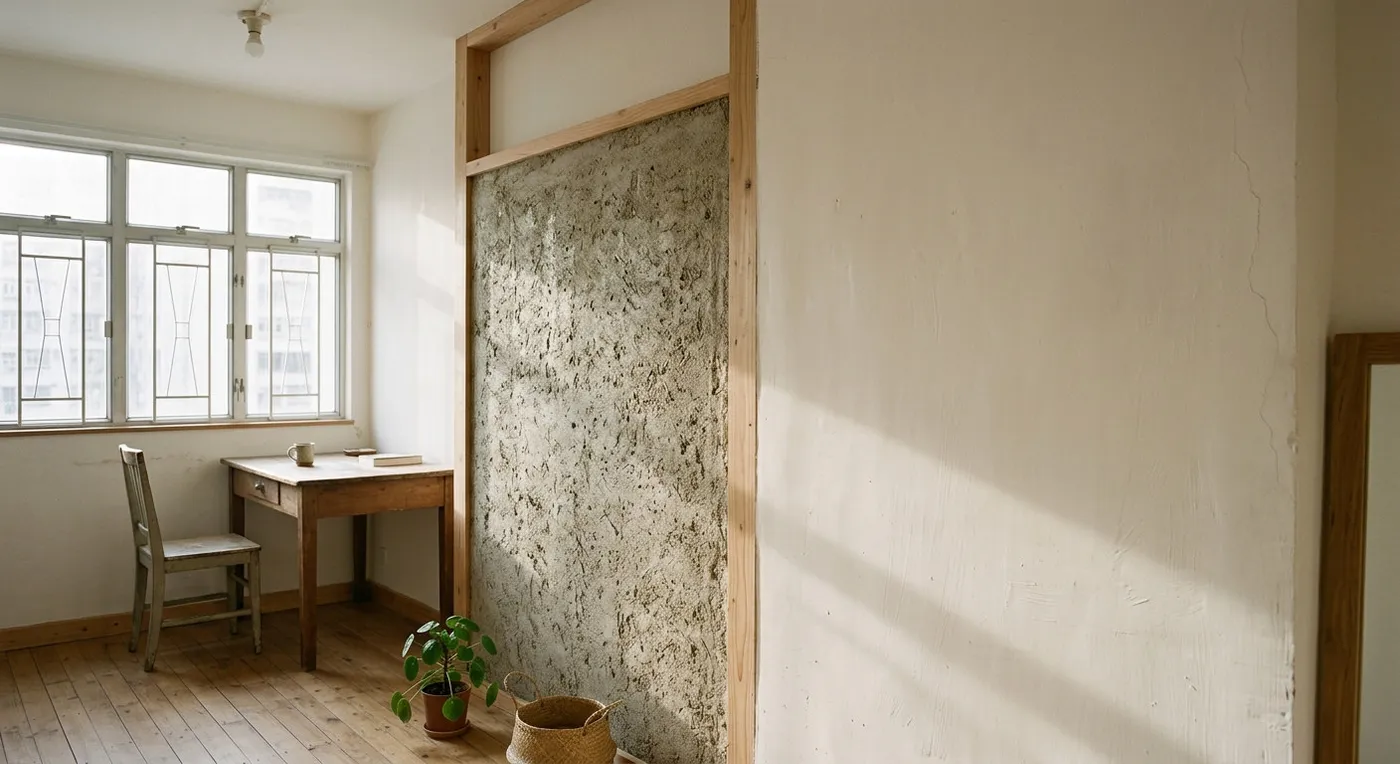
Hempcrete is a lightweight building material made from hemp shiv (the woody core of the hemp stalk) bound with a lime binder. It is not structural. It is typically used to infill timber frames or as an insulating layer. Its advantages are real: it is breathable, it moderates humidity, it insulates well, and it is carbon-negative, since hemp absorbs carbon as it grows. But the drawbacks are just as real: low strength, no water resistance on its own (it needs an added waterproofing layer), a complicated installation process, and a tendency to develop mould in damp conditions.
The Reality of Using Hempcrete in Hong Kong
Hong Kong is humid year-round with a long wet season, and hempcrete’s breathability can become a double-edged sword: if the design is not right, moisture that gets into the wall has nowhere easy to go and struggles to dry out. On top of that, most Hong Kong buildings are reinforced concrete, so adding a hempcrete infill wall means working out how it connects structurally and how it is waterproofed at every junction. The Portuguese project used the Segal Method, a demountable timber-frame building method, but Hong Kong construction typically relies on nailed boarding or cement rendering, which makes any later modification expensive.
In short: hempcrete is a genuinely promising eco-material, but applying it in Hong Kong requires a careful assessment of environmental and construction constraints. If there is one thing worth bringing home from the Portuguese chicken coop, it is the design philosophy behind it: that every detail, however humble, deserves careful thought. If you are facing a similar design dilemma, our team can help assess your options.
Discuss your space
Share your floor plan or photographs for a considered assessment of design possibilities, practical constraints and budget.