Limestone Installation and Maintenance: Sealing, Fixing and Finishes
A limestone repair case illustrates the relationship between natural texture, installation and maintenance.
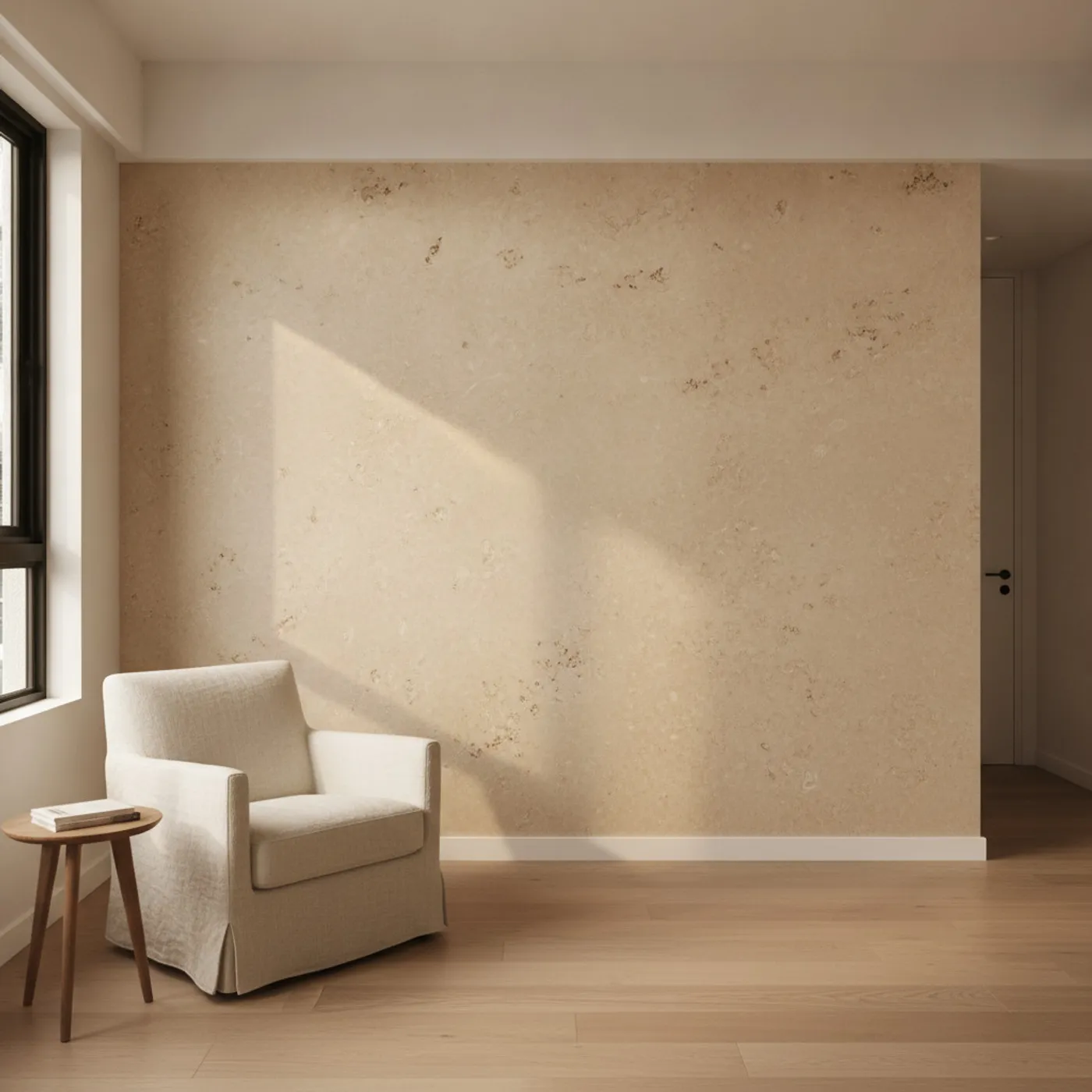
An owner contacted us after water marks and hollow areas appeared in a limestone living-room wall. Photographs showed its texture; site inspection helped clarify moisture, fixing and long-term use.
Natural variation and site conditions
Stone selection should consider samples, light, variation between slabs and installation conditions together.
Sealing and wall installation
Limestone is porous. The case involved the formulation of an impregnating sealer, two to three applications and drying between coats. Backing adhesive and mechanical fixings for large wall slabs also required coordination with the stone and substrate.
Water marks, efflorescence and hollow areas are relevant observations during assessment.
Floor finishes
Polished finishes reveal colour and grain but should be assessed for wet conditions and scratching. The original comparison used Mohs hardness values of three to four for limestone and six to seven for floor tiles to illustrate differences.
Honed finishes offer a softer appearance; porosity, staining and cleaning still require consideration.
Site checks
Compare density, tone and mineral markings; check sealing with a water-bead test; and confirm movement joints and finishing. This case used joints of three to five millimetres with matching silicone.
Natural appearance, installation precision and maintenance should be considered together. Please contact our team to compare suitable approaches.
Discuss your space
Share your floor plan or photographs for a considered assessment of design possibilities, practical constraints and budget.