Farm Retail Design: Brand, Materials and Customer Experience
A case study of a small organic rice shop shows why chasing a literal 'rustic look' backfires, and how subtraction and turning structural flaws into features tell a truer story.
I once read an interview about a designer creating packaging for farmers, finally giving their produce a way to tell its own story. The same thing happens constantly in interior design: plenty of small businesses have the real substance behind them, but the moment you walk into their shop, the space fails to match the product, because it is not saying anything itself.
What I want to share this time is a small shop selling organic rice. The owner is a third-generation rice farmer, and her grain is genuinely award-winning quality, but her physical shop in a mall kept coming across as either “must be expensive” or “not sure what they even sell.” When she came to us, her opening line was: “I want a rustic look: straw, wooden crates, hemp rope, ideally all of it.”
Do Not Ask “What Style Do You Want”: Ask “What Do You Want People to Feel”
Take a brief like that at face value, and you will easily end up with something that looks like a homestay prop shop: plenty of photo spots, but the actual product disappears. Sitting down with her, we found her real ask was simple: she wanted customers to feel that “this rice comes from a real field.” That reframes the whole direction: not adding decoration, but stripping away everything unnecessary, so the space carries the texture of something that has actually been out in the sun.
Turning a Flaw Into Part of the Story
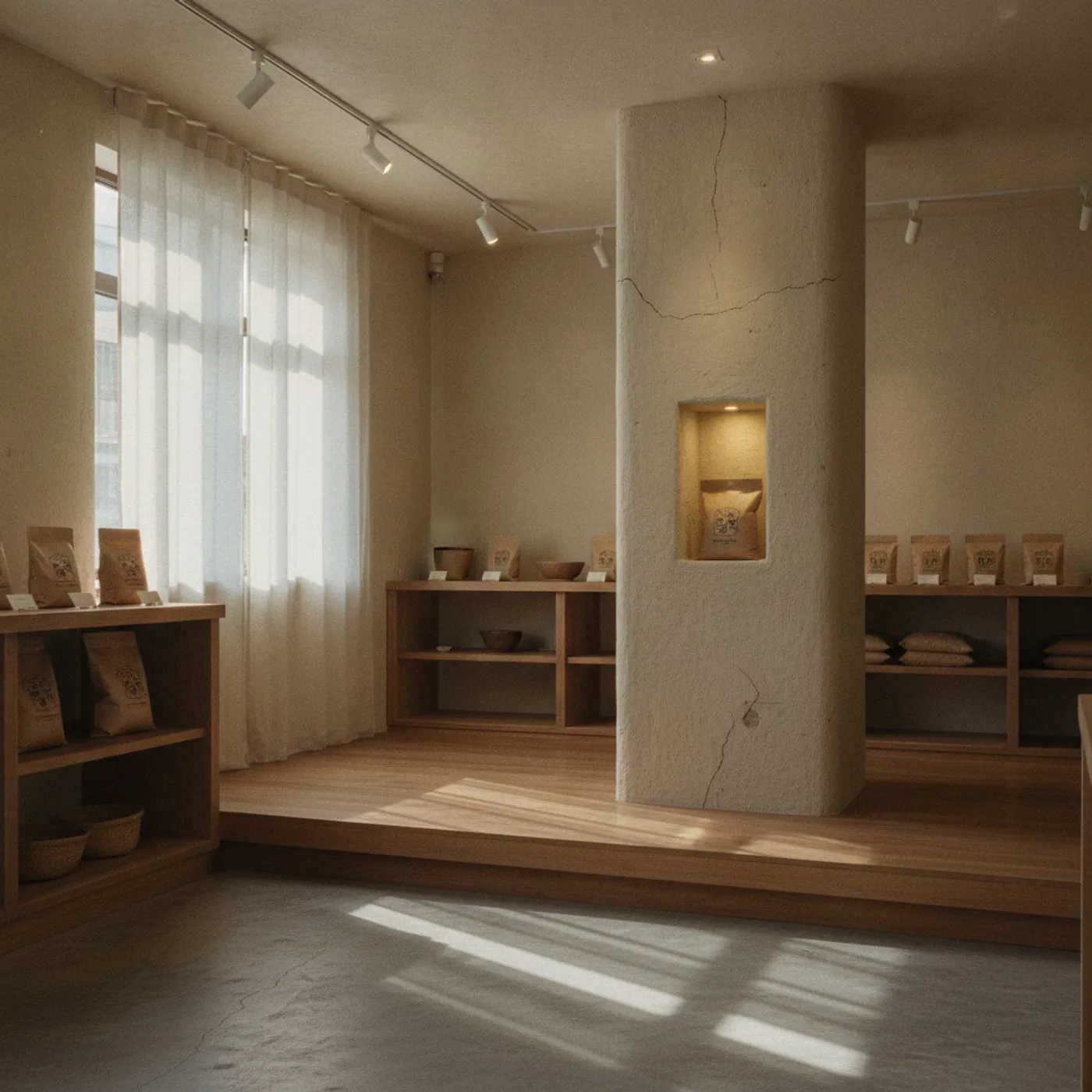
The shop had a large structural column sitting right in the middle. The architect said it could be removed, but the cost was high and it would compromise the ceiling structure; any structural change would need assessment by a qualified professional. In the end, we wrapped the column in coarse plaster and left a recess for a display light niche. At first, the owner felt the column was “big and in the way.” But once the work was done, plenty of customers asked, “Was this column always here?” It became a kind of time marker, and it made the whole shop feel more grounded, more real.
What this case really gets at is this: designing a farm produce store does not mean imitating a field. The imperfect, irregular, weathered quality of an actual field is itself the source of the design, not something you copy on top. Using whatever construction moves are genuinely economical, working with the ceiling and structure you actually have rather than against them, ends up reading far more true.
Discuss your space
Share your floor plan or photographs for a considered assessment of design possibilities, practical constraints and budget.