Solid Timber, Composite and Fire-Resistant Boards: Properties and Uses
An honest comparison of solid wood, composite board (plywood/MDF), and fire-rated laminate: their properties, trade-offs, and best uses in Hong Kong's humid climate.
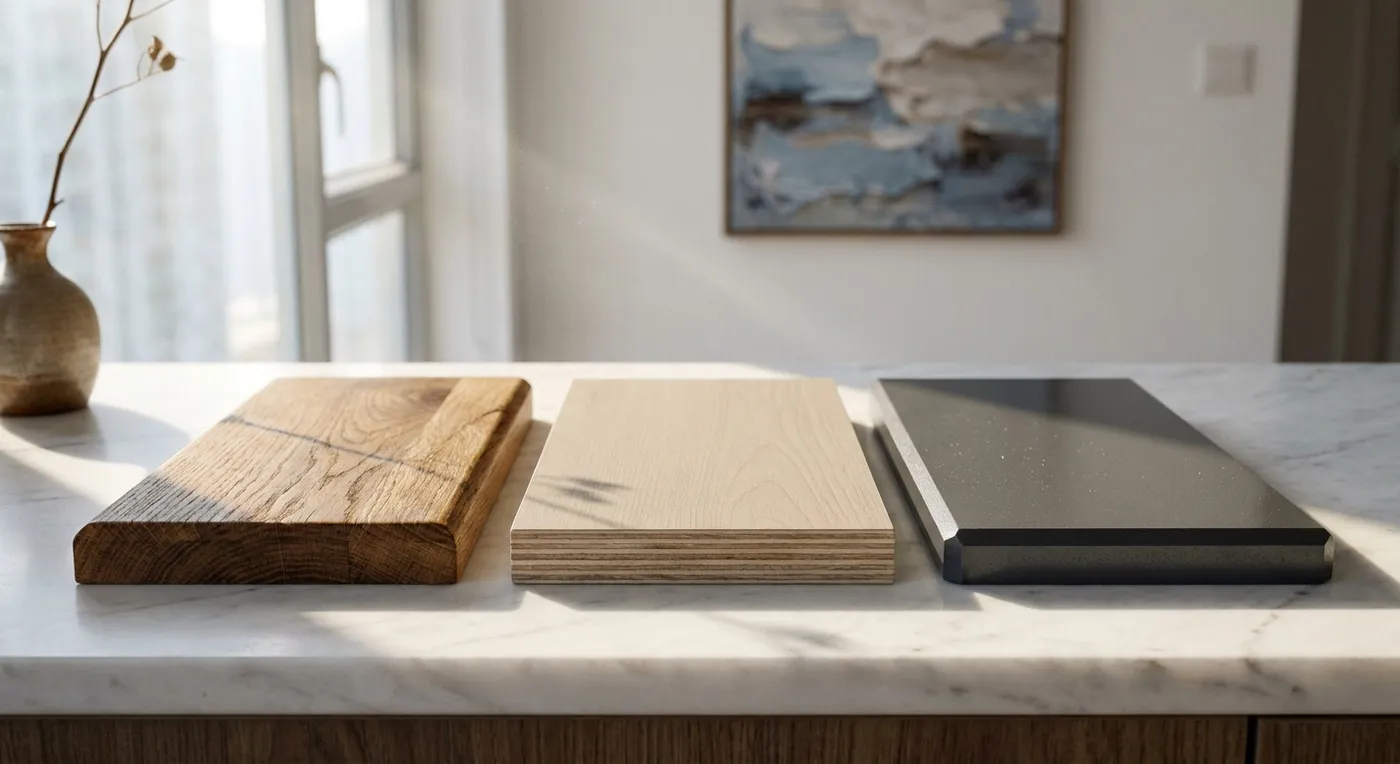
People ask me constantly: “Is solid wood automatically the more premium choice? And is composite board full of chemicals?” After all these years in design, I have noticed that many owners get misled by the “perfect vision” that is sold to them. So today, the honest version: a straightforward breakdown of what these three common board materials are actually like.
Solid wood: the price of natural beauty is movement
Solid wood genuinely has a distinctive grain and texture, but you need to accept that it will expand and contract with humidity, especially in Hong Kong’s climate. In Hong Kong flats, solid wood door frames are prone to slight warping; this is not a workmanship issue, it is simple physics. If you love that natural quality and do not mind a bit of upkeep every year, solid wood is a great choice. Otherwise, it is worth considering a more stable alternative.
Composite board (plywood/MDF): good value, but sensitive to water
Composite board is pressed from multiple layers of wood veneer or fibre, giving it better stability than solid wood and letting it form larger seamless surfaces. Its biggest weakness, though, is swelling on contact with water: if the edges of kitchen or bathroom cabinet doors are not properly sealed, they will often start to bubble within a few years. My usual recommendation is composite board finishes for living rooms and bedrooms, switching to fire-rated laminate or aluminium panels for humid areas.
Fire-rated laminate: durable, but limited in texture
Fire-rated laminate is essentially a high-pressure laminated board. Its strengths are fire resistance, scratch resistance, and easy cleaning, making it a great fit for households with young children. That said, it never quite matches the warmth of wood to the touch, and it can only bend to a limited curvature, which restricts design flexibility. If practicality matters more to you than tactile quality, this is the rational choice.
There is no absolute right or wrong material, only what suits your lifestyle and the constraints of your space. If you are facing a similar material dilemma, our team can help assess your options.
Discuss your space
Share your floor plan or photographs for a considered assessment of design possibilities, practical constraints and budget.