Children’s Rooms Over Time: Durability and Changing Needs
Covering walls, furniture materials, storage, and lighting switches, this piece breaks down the wear-and-tear traps that show up in kids' rooms three to five years after renovation, and how to handle them.
Every time I see photos of a freshly renovated kids’ room, I cannot help but wonder: what will this room look like in three years? Will the walls still be pristine white? Will the drawers still glide smoothly? As a designer who often gets called in to fix “unfinished business” for clients, I have seen plenty of brand-new designs that, a few years down the line, expose the weaknesses in their structure and materials. Today we take an objective look at what really happens to a kids’ room design once time takes its toll.
Walls: The First to Give Up
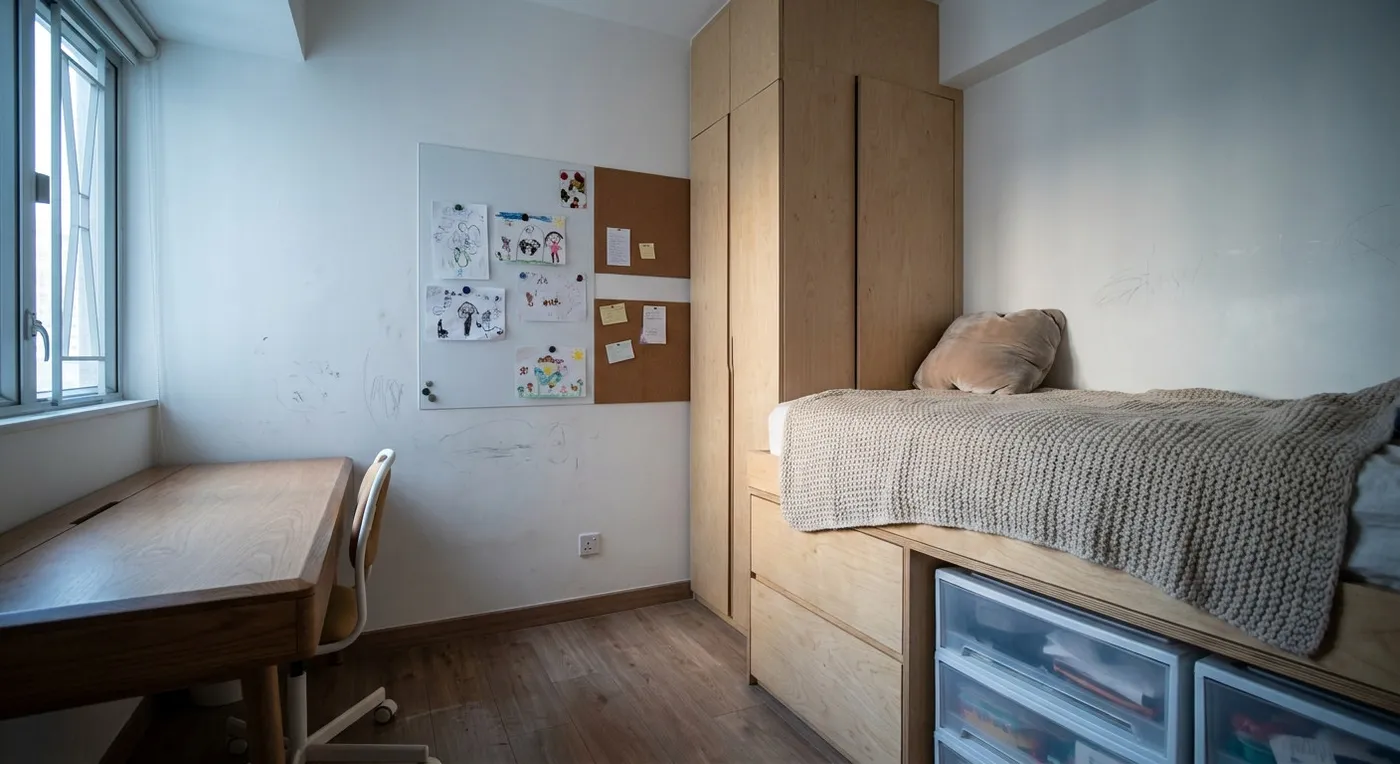
When choosing wall finishes for a kids’ room, many people default to “waterproof and easy to clean,” reaching for waterproof paint or high-gloss wallpaper without much thought. But the truth is that Hong Kong’s humidity is high, and if waterproof paint goes on before the base layer is fully dry, it blisters and peels quickly. High-gloss wallpaper may resist scuffing on the surface, but once a child draws on it with crayon, it is essentially impossible to clean, which is when you will wish you had gone with removable wall decals or magnetic paint instead.
The real pain points after three years: dents in the wall, pencil marks, sticky residue left behind by stickers. One workable solution is to set aside one wall for drawing (a replaceable corkboard or whiteboard panel) so the child has somewhere to be creative while the rest of the room stays clean.
Furniture: Solid Wood Is Not Always the Most Durable
Many clients insist on solid wood furniture for their children, believing it is sturdier. But Hong Kong’s humid climate makes solid wood (pine especially) prone to warping and cracking. High-quality multi-ply board or MDF with moisture-resistant edging, on the other hand, actually holds its shape more reliably over time. Also pay attention to drawer runners and door hinges. Cheap steel runners start sticking within two years, so stainless steel or soft-close hardware lasts better.
The reality after five years: sagging wardrobe doors, drawers that will not glide, warped shelving. When installing, ask your designer to use adjustable feet, so the furniture can still be levelled years later even if the floor has shifted.
Storage: There Is Never Enough
At the design stage, it is easy to think “this cabinet will hold all the toys and books.” But the reality is that a child’s belongings pile up far faster than anyone expects. A better approach is to reserve part of the space for flexible storage: stackable plastic bins or rolling racks that can expand as needed. And keep the space under the bed tidy (or use a lift-up storage bed for organised storage), so it does not turn into a black hole for clutter.
Lighting and Switches: The Overlooked Wear Points
Kids’ rooms often feature coloured lampshades or novelty pendant lights, but replacing the bulbs inside them can be a real hassle. It is better to stick with a standard E27 screw fitting, and to position light switches well away from the bed so kids cannot accidentally break them while playing. And remember to fit USB-equipped outlets throughout. Five years from now, there will likely be more than one gadget needing a charge. Electrical work should be carried out by a registered electrical worker.
If you are planning a kids’ room renovation, or have lived in one for a few years and are starting to notice problems, please contact our team to discuss your design needs. We will draw on years of experience to help you anticipate the common limitations, so your design stays good-looking and genuinely liveable.
Discuss your space
Share your floor plan or photographs for a considered assessment of design possibilities, practical constraints and budget.