Natural Textures in Interior Materials: Touch, Appearance and Maintenance
Comparing microcement, textured wallpaper, and 3D tile (three materials that mimic moss and bark) on feel and upkeep in Hong Kong homes.
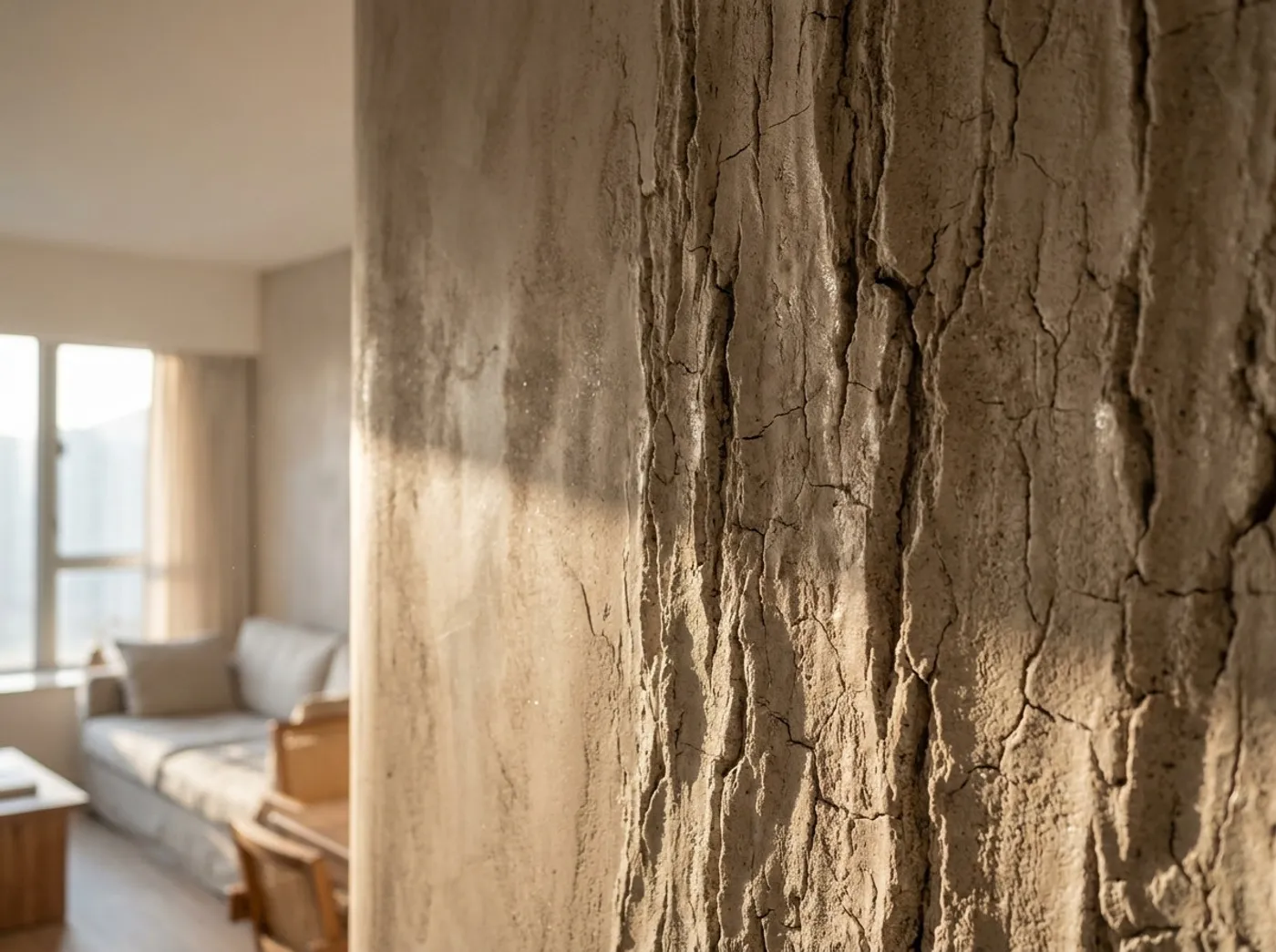
We recently saw a graduate piece from the UK’s New Designers 2026 show that used knitted textiles to mimic the texture of moss, bark, and mushrooms, and it reminded us of a question clients ask all the time: “Can you bring the forest into my home?” Obviously we are not suggesting you lay down real soil and grow moss on your walls: in Hong Kong’s humidity, that is a fast track to mould. But modern materials genuinely can achieve a similar feel and look; the key is understanding the trade-offs clearly, rather than being seduced by a pretty photo.
The Main Options for Mimicking Natural Texture
The three most common approaches are microcement, specialty textured wallpaper, and 3D tile. Each mimics a different natural quality, but they differ enormously in practicality.
Touch vs. Practicality: A Real Trade-off
A pitfall many homeowners overlook is the tension between “the tactile experience” and “day-to-day upkeep.” Materials that mimic natural texture are, by design, meant to draw people in to touch and get close, much like how the exhibition piece was described as inviting “repeated looking and touching.” But in real life, frequent touching leaves handprints and oil marks, textured surfaces need a soft brush to clean properly, and some finishes need periodic resealing.
We worked on one project where a client’s living room used bark-effect microcement on a feature wall. It looked beautiful, but after living with it for six months, the cat’s claws had left several visible scratches, and spot-repairing them turned out to be extremely fiddly. So if you have pets or young children, go in expecting the material to take a beating. On the other hand, a low-traffic space like a study or a main bedroom is much better suited to a high-texture finish like this.
Our Honest Advice: How Do You Decide?
New materials keep appearing, but that does not mean any given one suits your environment. We would suggest testing on a small area first (a feature wall or the entryway, say) so you can feel what it is actually like to touch day to day. And ask your supplier directly about scratch resistance, water resistance, and cleaning instructions: do not take the showroom sample’s word for it.
If you are facing a similar design dilemma, please contact our team to discuss your design needs.
Discuss your space
Share your floor plan or photographs for a considered assessment of design possibilities, practical constraints and budget.