Plant-Waste Materials: Applications and Limits in Hong Kong Homes
An objective look at whether recycled material pressed from florist and funeral plant waste can hold up in Hong Kong's humid, space-tight homes, with practical usage advice.
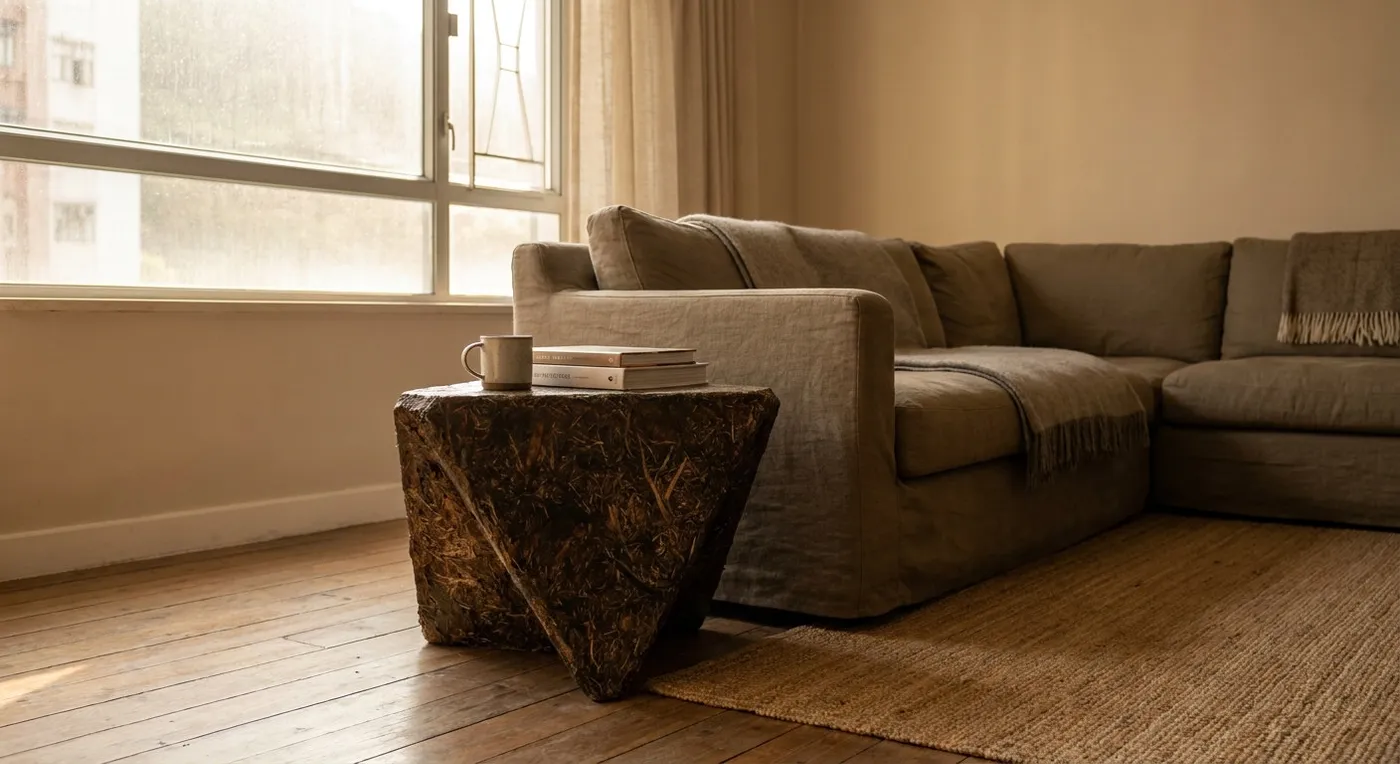
At a recent graduate design show overseas, we came across a material series made from florist waste and funeral flower offcuts: plant remnants pressed into boards and turned into furniture. It is a compelling concept, but can this kind of “recycled material” actually hold up in an environment as humid and cramped as Hong Kong? As interior designers, we are always thinking about how to bring sustainable ideas into local projects, but we also owe it to our clients to be objective about the real benefits and the real pitfalls.
The Main Upsides of Plant-Waste Material
Let us start with the benefits. This kind of material is typically plant fibre pressed with natural resin, and it may carry a lower carbon footprint than conventional plywood or MDF. Every panel also has its own one-of-a-kind grain, full of organic character. If you want a home with a natural, warm feel but do not want to pay for (or bear the environmental cost of) solid wood, plant-waste board is an interesting alternative.
Real-World Limits: Three Challenges of Hong Kong Living
Because of these limitations, we generally advise clients to reserve this kind of material for dry areas (a finish in the master bedroom, or a feature wall in the living room) or to use it as an accent detail, rather than building an entire home’s worth of cabinetry from it. If you are keen to use this eco-material, it is worth getting samples from the supplier first and testing their stability in Hong Kong’s climate, rather than placing an order purely because the concept looks good in photos.
If you are facing a similar design question, please contact our team to discuss your project.
Discuss your space
Share your floor plan or photographs for a considered assessment of design possibilities, practical constraints and budget.