Eelgrass Acoustic Panels: Modular Design and Acoustic Performance
An analysis of Søuld Fragments, a modular acoustic tile made from eelgrass waste with an NRC of 0.70, and its pros and cons in humid Hong Kong flats.
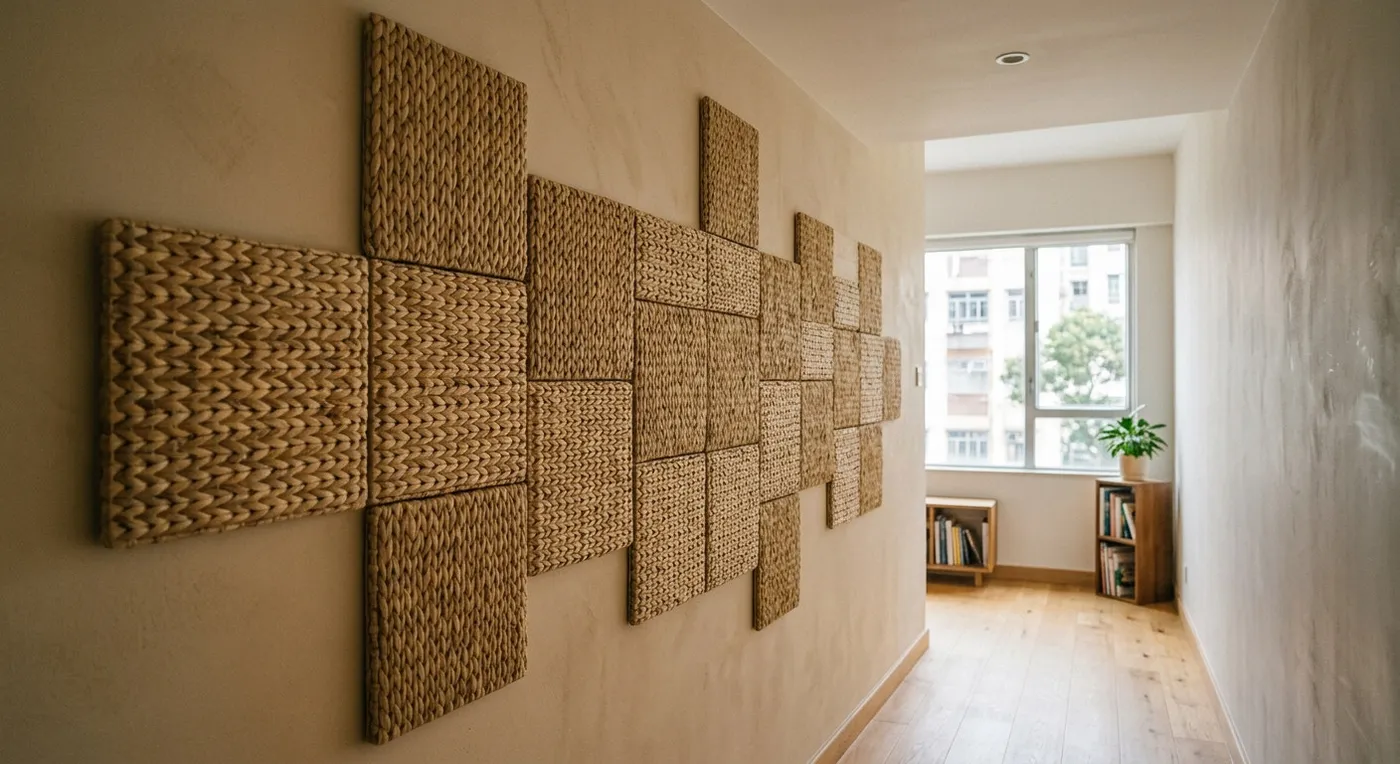
Say “acoustic panel” and most people picture black or grey foam. But sound-absorbing materials actually come in far more varieties than that, and eco-friendly options have matured considerably in recent years. Spinneybeck recently teamed up with Danish brand Søuld to launch Søuld Fragments, a modular acoustic tile made from eelgrass waste. The design does not just repurpose offcuts that would otherwise be thrown away. It also achieves an NRC of 0.70, putting it roughly on par with traditional foam. Here is an honest look at the pros and cons of natural-material acoustic panels like this one, with particular attention to what they mean in a typical Hong Kong flat with an 8-foot ceiling.
The upsides of natural-material acoustic panels
Eelgrass is a carbon-storing plant that is collected along the Danish coastline after it naturally dies off, then dried and processed. Its fibrous structure absorbs sound effectively as it passes through, rather than bouncing it back the way hard materials do. The modular tile format also makes it easy to combine flexibly across different wall areas.
Real-world physical limits worth knowing
Every material has its downsides, and natural materials in particular need to reckon with Hong Kong’s humidity. There is not much detailed data yet on how well eelgrass acoustic panels resist moisture and mould, so placing them near a bathroom or kitchen may call for extra treatment. It is also worth noting that an NRC of 0.70 is a lab-condition figure: in a real room, furniture, foot traffic, and corner effects will all cause some deviation from that number. Installation method matters too: mounted flush against a bare concrete wall, low-frequency absorption will be noticeably worse than in a design that includes an air gap.
The bottom line: worth considering, but not a cure-all
Eco-friendly acoustic panels like this are genuinely good-looking and functional, and particularly well suited to clients who value sustainability and a natural aesthetic. That said, we will not recommend them blindly. Every material has the situation it is actually suited to. If you are facing a similar design dilemma, please contact our team to discuss your requirements.
Discuss your space
Share your floor plan or photographs for a considered assessment of design possibilities, practical constraints and budget.