Multifunctional Children’s Furniture: Use, Materials and Structure
Using the Casul kids' chair that unfolds into a castle as a case study, an honest look at plywood's material limits in humid Hong Kong.
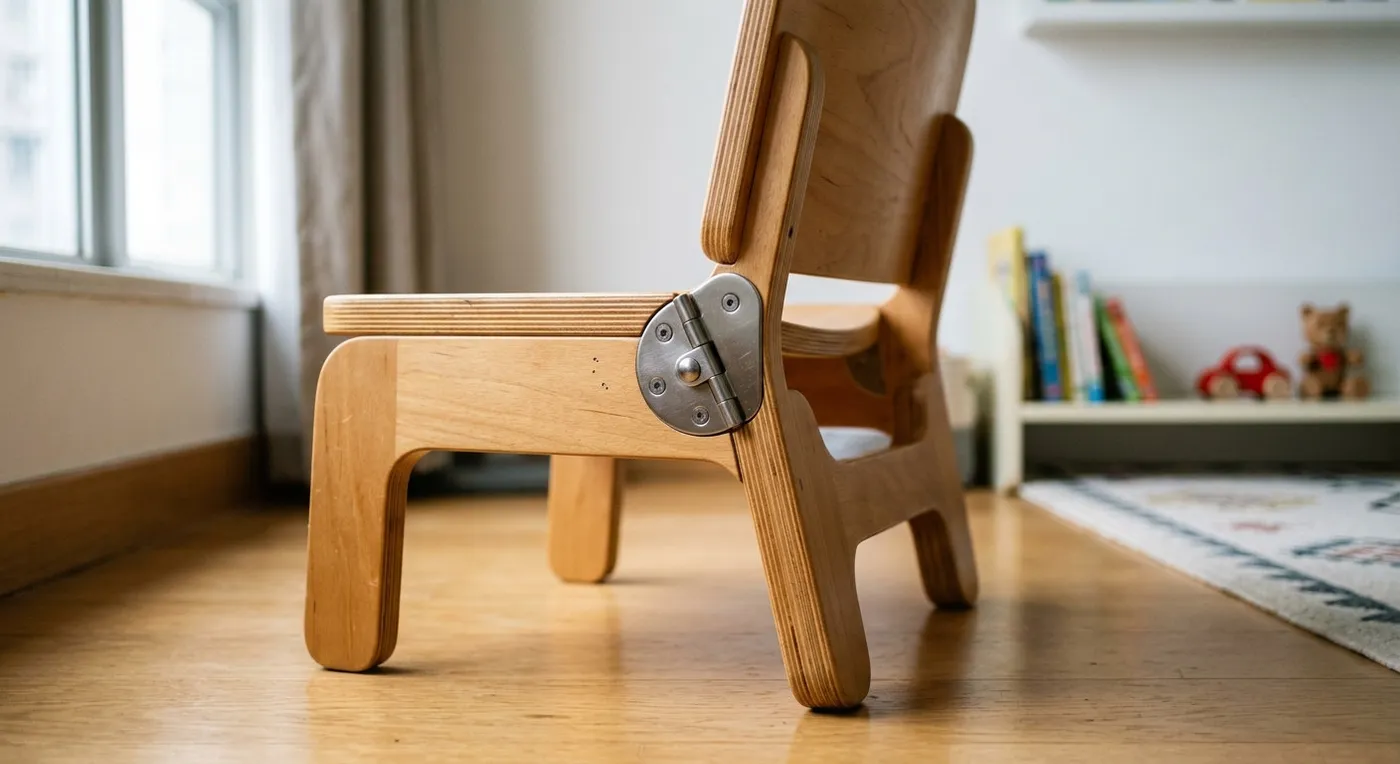
We recently came across a rather delightful design: a kids’ chair called Casul that, through a set of simple joints and hinges, unfolds into a small castle, complete with hidden foam swords and a shield. It is an appealing idea, especially in Hong Kong’s cramped flats, where one piece of furniture doing the job of several sounds like a real space-saver. But as a design director who regularly helps clients think through children’s rooms, what I see here is not just creativity. It is a whole set of practical questions worth working through.
Plywood’s advantages, and its physical limits
Furniture like this is usually made from birch plywood, because it is light, strong, and easy to cut into complex shapes. But Hong Kong’s climate is humid, and plywood that is not properly edge-sealed, or that is glued with the wrong adhesive, warps and moulds easily. It is also worth noting that while well-made hinges and joints can keep the structure sturdy, plywood edges are still fundamentally harder than solid wood or upholstered surfaces, and a child bumping into one will feel it. The designers used kid-safe hinges, but solid wood or padded protection still offers more cushioning.
Multifunctional design: real advantage, or real pitfall?
A chair that becomes a castle can, in theory, spark imagination, and lets a child play independently without an adult’s help. But in Hong Kong, it pays to think it through practically.
That said, if it is designed well (as with Casul’s chalkboard-paint finish, which lets kids repaint it however they like), it genuinely extends the piece’s useful life. Another version hides foam swords inside, which is a charming idea, but worth asking: in Hong Kong’s humidity, could foam swords harbour bacteria? How easy are they to actually clean?
An honest recommendation: do not chase multifunctionality for its own sake
We are not dismissing this kind of design. We just want to flag that when choosing children’s furniture, “it transforms” should not be the only selling point that matters. Practical use and cleaning matter just as much.
If you are facing a similar design dilemma, please contact our team to discuss your requirements.
Discuss your space
Share your floor plan or photographs for a considered assessment of design possibilities, practical constraints and budget.