IKEA MAMMUT Hidden Storage: Structure and Function
We break down how IKEA's MAMMUT table hides structural storage in plain sight, and what limits this trick faces in a small Hong Kong flat.
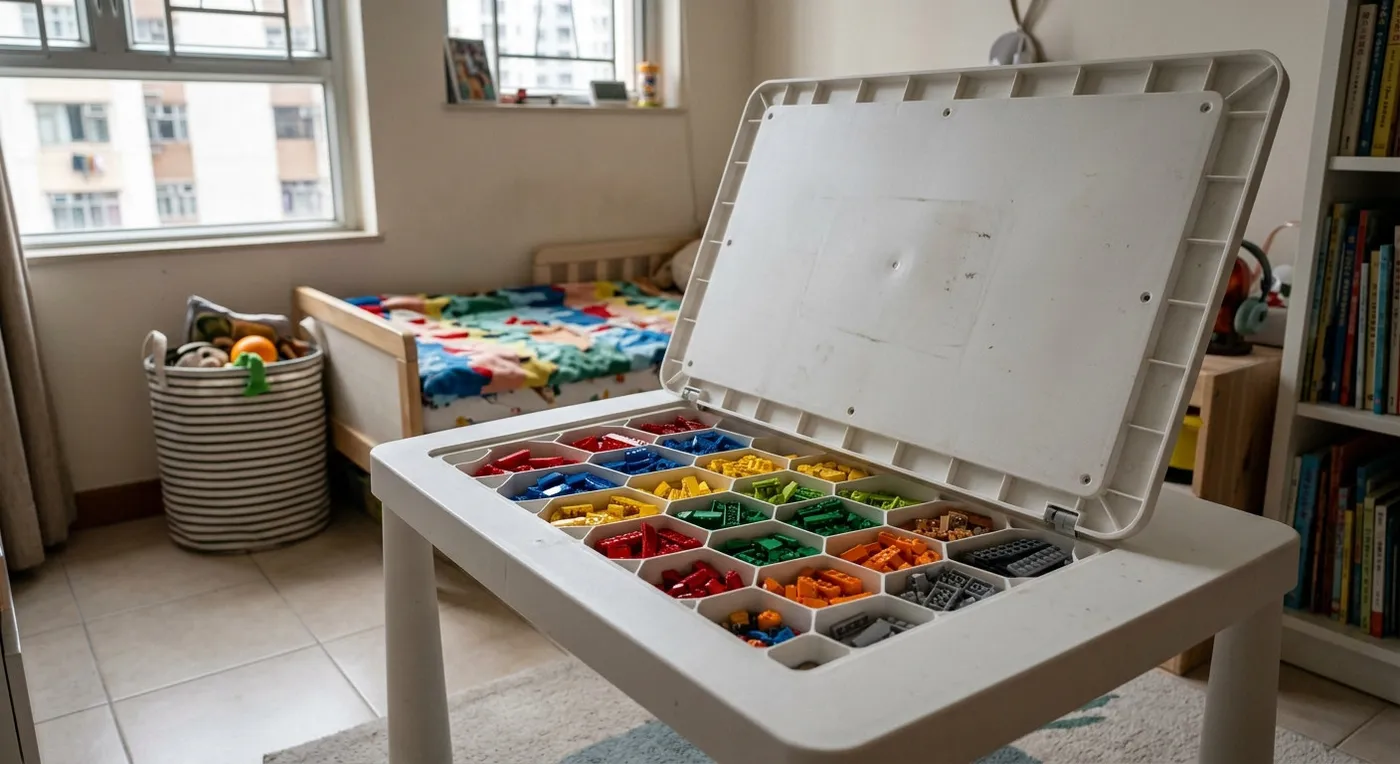
If you have children and live in a small Hong Kong flat, you have probably struggled to find somewhere to put all the LEGO and small toys. Someone online recently discovered that IKEA’s MAMMUT children’s table has had a hidden feature all along: lift the tabletop, and the base underneath is divided into a honeycomb-like grid of compartments, perfectly sized for sorting building blocks. But this is not an accident. IKEA deliberately merged structure with function here, using the structural element itself to solve a storage problem. Today we are taking an objective look at the strengths and pitfalls of this kind of design.
Structural Design vs. Bolt-On Storage: Why Hidden Storage Is Smarter
Plenty of homeowners buy storage baskets, dividers, or custom-built drawers to add more storage, but these are all “add-on” solutions that eat into extra space. MAMMUT’s approach instead builds the storage directly into the furniture’s structural frame: the compartments under the tabletop were originally there to reinforce the surface’s load-bearing capacity, and they happen to double as ready-made sorting bins. This “one thing, two functions” thinking is especially worth borrowing in a Hong Kong flat. That said, this kind of design is not found in every piece of furniture, and it comes with some clear limitations.
No Modification Needed to Sort Your Stuff: The Real Value of Structural Design
The original write-up called it “No Hack Required,” and that is exactly what makes this design so clever. Here in Hong Kong, when we want to squeeze more out of a space, our instinct is usually to modify or custom-build a cabinet. But sometimes, just choosing the right off-the-shelf furniture (one with the right structure already built in) saves a good deal of effort. With MAMMUT, you lift the tabletop, drop the LEGO in and close it again. No tools or alterations are needed. For tenants, or families who want to keep their options open, this kind of built-in solution is a genuinely useful, low-cost option.
To be fair, though, the design is not perfect. The space under the table shrinks, and kids may end up bumping their feet against it. And if what you need to store is larger toys, such as dolls or toy cars, these small compartments will not help. So before buying furniture, it is worth thinking carefully about the size and quantity of what you actually need to store.
In Short: Structural Thinking Saves Space, But It Is Not a Cure-All
IKEA’s MAMMUT hidden storage is a great example of turning a structural constraint into a functional advantage. For Hong Kong buyers, it is worth paying closer attention to a piece’s base structure, materials, and reserved space next time you are furniture shopping. You might discover more “hidden features” than you expect. If you are facing a similar design question, please contact our team to discuss your project. Sometimes you do not need a major renovation, just the right structure, to save a surprising amount of space.
Inspiration: the design blog post “IKEA Has Been Hiding a LEGO Organizer in Plain Sight” by Stacy Randall
Discuss your space
Share your floor plan or photographs for a considered assessment of design possibilities, practical constraints and budget.