Metal Hardware in Interiors: Colour, Materials and Coordination
Debunking three common myths about mixing metal hardware in Hong Kong's small, humid flats: dominant-to-accent ratios, upkeep, and where to concentrate the mix.
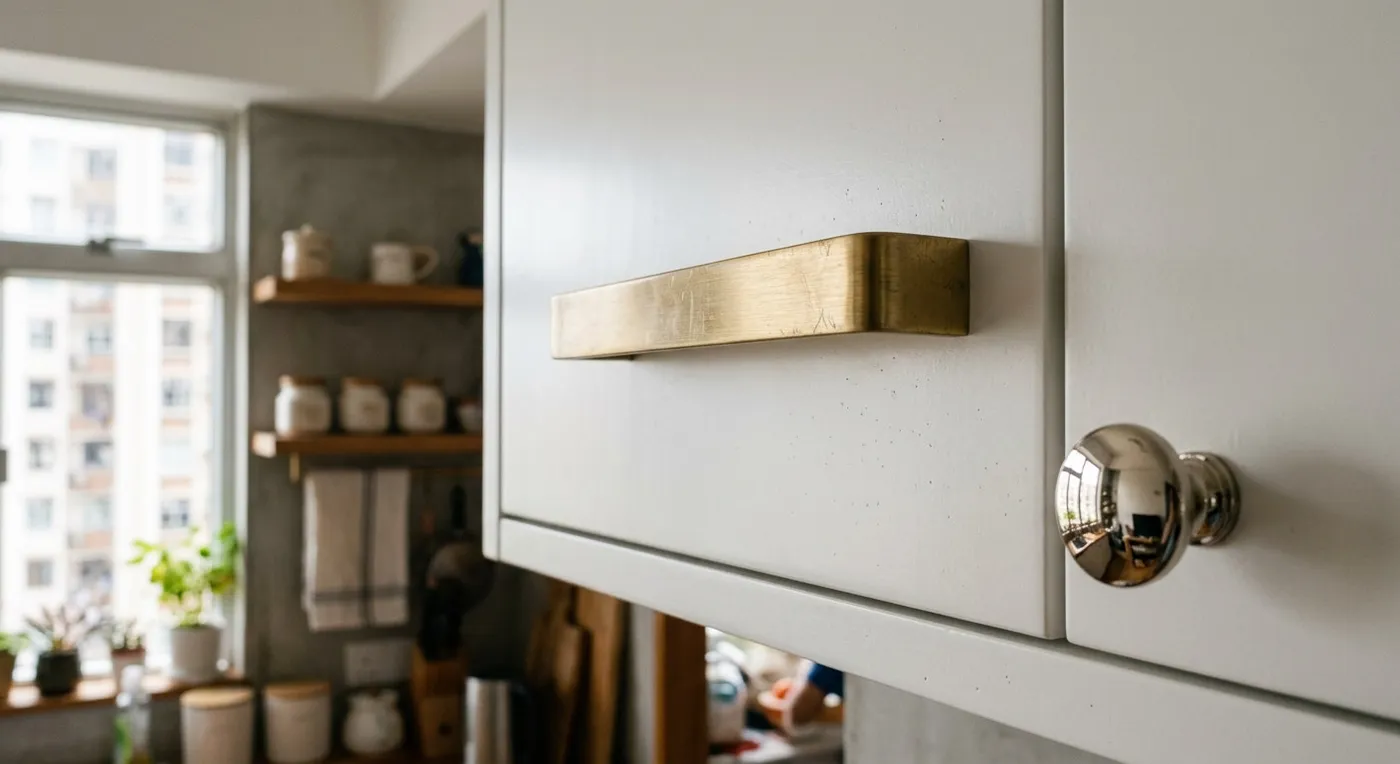
For years, there has been an unwritten rule in interior design: all the hardware throughout a home should match in finish. But the mixed-metals trend has arrived in force: take the Duet collection from Lo & Co and SMAC Studio, which pairs brushed brass with polished nickel. Does this approach actually work in Hong Kong’s small, humid flats, or is it a trap waiting to happen? CLAY’s design team breaks down a few common myths.
Myth One: Mixing Metals Means “Anything Goes”?
Fact: mixing metals is a deliberate, calculated design technique that uses the different sheen and texture of each metal to build depth. The key is establishing one dominant finish and using a second metal purely as an accent, for example 80% brushed brass with 20% polished nickel. It is not a free-for-all mix.
Myth Two: Mixed Metals Are Hard to Clean?
Fact: how a metal holds up depends on its finish. Brushed or satin finishes resist stains and fingerprints far better than polished or mirrored ones. In Hong Kong’s humid weather, polished nickel is prone to water spots; brass fares better when the surface has a protective lacquer coating. Choose the right finish and there is nothing to worry about.
Myth Three: Small Flats Are Not Suited to Mixed Metals?
Fact: quite the opposite! A single metal finish throughout a small flat can feel flat and monotonous, while mixing metals creates visual focal points and spreads the eye around the space. Just watch the ratio: an even split of metal finishes will make a space feel busy and fragmented. One practical tip: concentrate the mix within a single zone (say, the entryway cabinet hardware plus a light fixture) and keep everything else understated.
If you are facing a similar design dilemma, please contact our team to discuss your requirements.
Discuss your space
Share your floor plan or photographs for a considered assessment of design possibilities, practical constraints and budget.