High-Gloss Black Appliances: Finishes and Residential Applications
Breaking down the upkeep costs and real-world visual impact of car-grade lacquer black mirror appliances in Hong Kong's humid, space-tight homes.
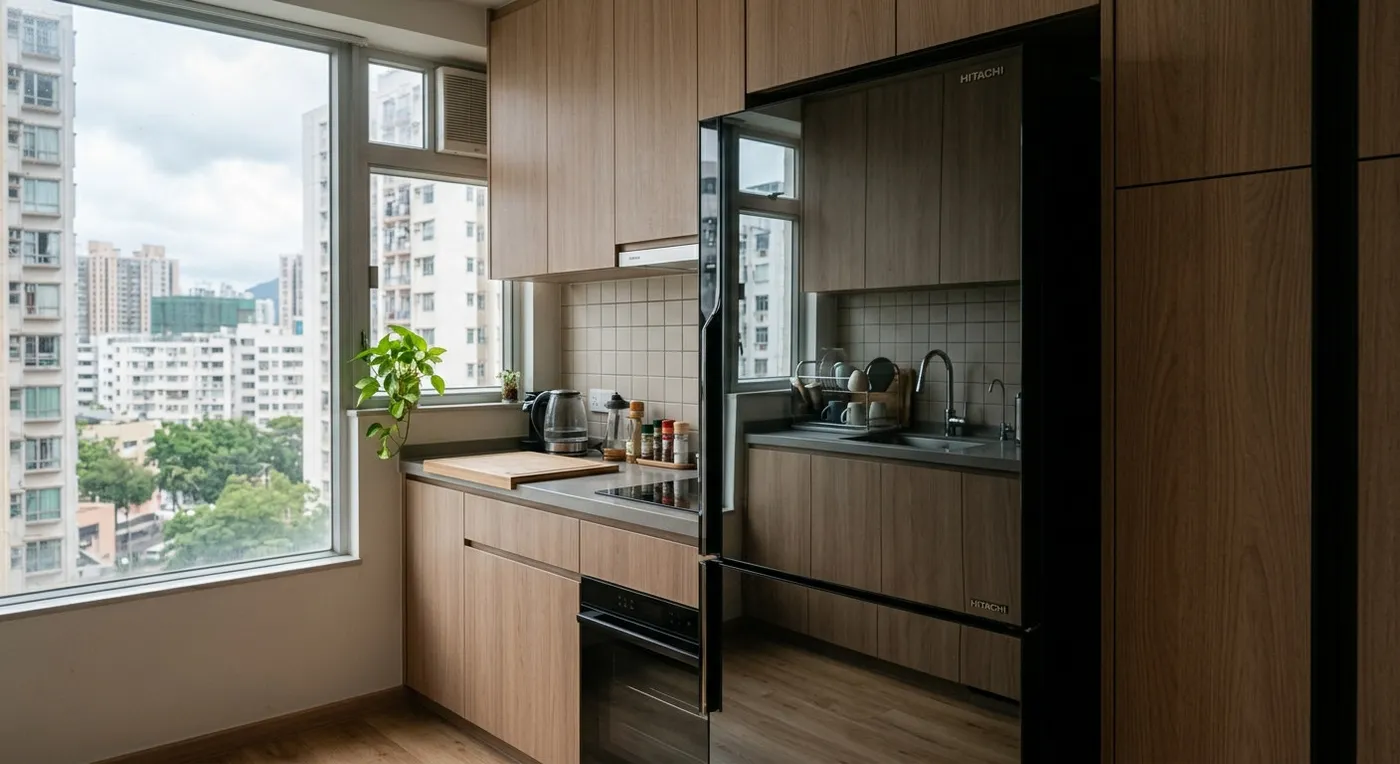
Food artist Laila Gohar recently designed a limited-edition “Black Mirror” fridge for appliance brand Rocco, using automotive-grade lacquer and three rounds of polishing to achieve a piano-black mirror finish, turning a fridge into something closer to a piece of art furniture. The concept is undeniably appealing, but as a Hong Kong designer, my first thought was: is this ultra-high-gloss surface actually a smart choice for our humid, compact flats? Here, from CLAY’s perspective, we break down the pros and cons objectively.
Automotive Lacquer on a Fridge: Craft and Cost
Achieving Rocco’s deep black-mirror effect takes 18 days of work: primer, ceramic coating, three stages of polishing, and a final wax finish. This process was originally developed for automotive bodywork; applied to an appliance, it delivers hardness and scratch resistance far beyond ordinary baked enamel, but the cost climbs several times over as well. More importantly, Hong Kong’s home environment is nothing like the dry climate of Europe or North America: high humidity, more dust, smaller flats, and door handles that get touched constantly, all of which directly affect how the finish holds up over time.
High-Gloss Mirror Surfaces: Local Pitfalls to Watch For
That said, if you genuinely love this kind of statement look and are willing to put in the maintenance time, the visual impact of a Black Mirror finish is something no matte surface can match: it reflects light around the space, opens up sightlines, and can become a real focal point in an open-plan kitchen. But keep this in mind: do not treat the fridge like a display cabinet and plant it in the entryway or the middle of the dining room, because a single careless knock will ruin that flawless reflection.
If you are facing a similar design dilemma, please contact our team to discuss your requirements.
Discuss your space
Share your floor plan or photographs for a considered assessment of design possibilities, practical constraints and budget.