
Residential Stone: Properties, Applications and Maintenance
Drawing on a Scottish farmhouse and a rebuilt village in Tamil Nadu, we objectively compare granite, limestone, precast stone, and sandstone for weight, staining, and waterproofing limits in Hong Kong homes.
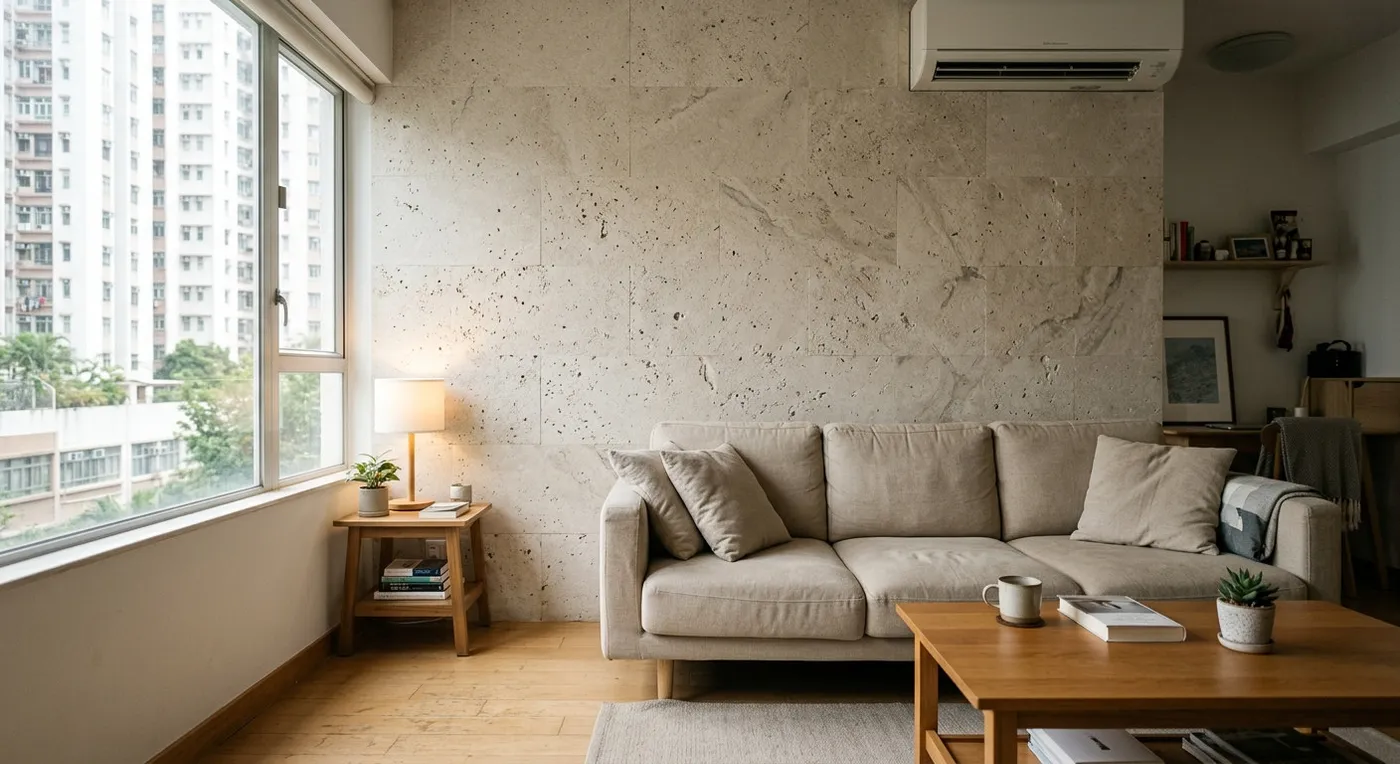
Choosing stone for a home involves more than colour and pattern. Compare the specific variety, slab thickness, surface finish and installation location. Materials within the same broad category can differ considerably.
Granite and Limestone: Compare Them for the Intended Use
For kitchen counters, review the supplier’s stain resistance, cleaning and installation information. Calcareous stones such as limestone need particular care around acidic liquids and cleaners. Granite should not be assumed to be immune to scratches or staining.
Assess weight using actual slab dimensions, thickness and support arrangements, rather than the stone name alone. Large or thick slabs and wall installations require appropriate confirmation of support and fixing details.
Maintenance: Sealing Is Not Automatically an Annual Task
Whether sealing is needed, which product to use and when to repeat it depend on the stone and its use. The Natural Stone Institute notes that some stones do not need sealing, and treatment does not make stone completely stain-proof. Reference: Natural stone care and cleaning.
Precast Stone and Sandstone: Check the Finish and Substrate
Precast products differ in composition and surface finish; sandstone also varies in absorption and durability. Moisture layers, drainage gaps and mechanical fixings should follow the substrate conditions and complete installation system, rather than a blanket rule based on Hong Kong’s climate.
Obtain samples and maintenance information, then compare options against cleaning habits, installation conditions and budget.
Discuss your space
Share your floor plan or photographs for a considered assessment of design possibilities, practical constraints and budget.