A Designer’s Daily Observations: Inspiration, Rest and Space
A reflection, inspired by Studio Benshi's Xiao You, on how designers balance creative energy through street foraging and pet-friendly design.
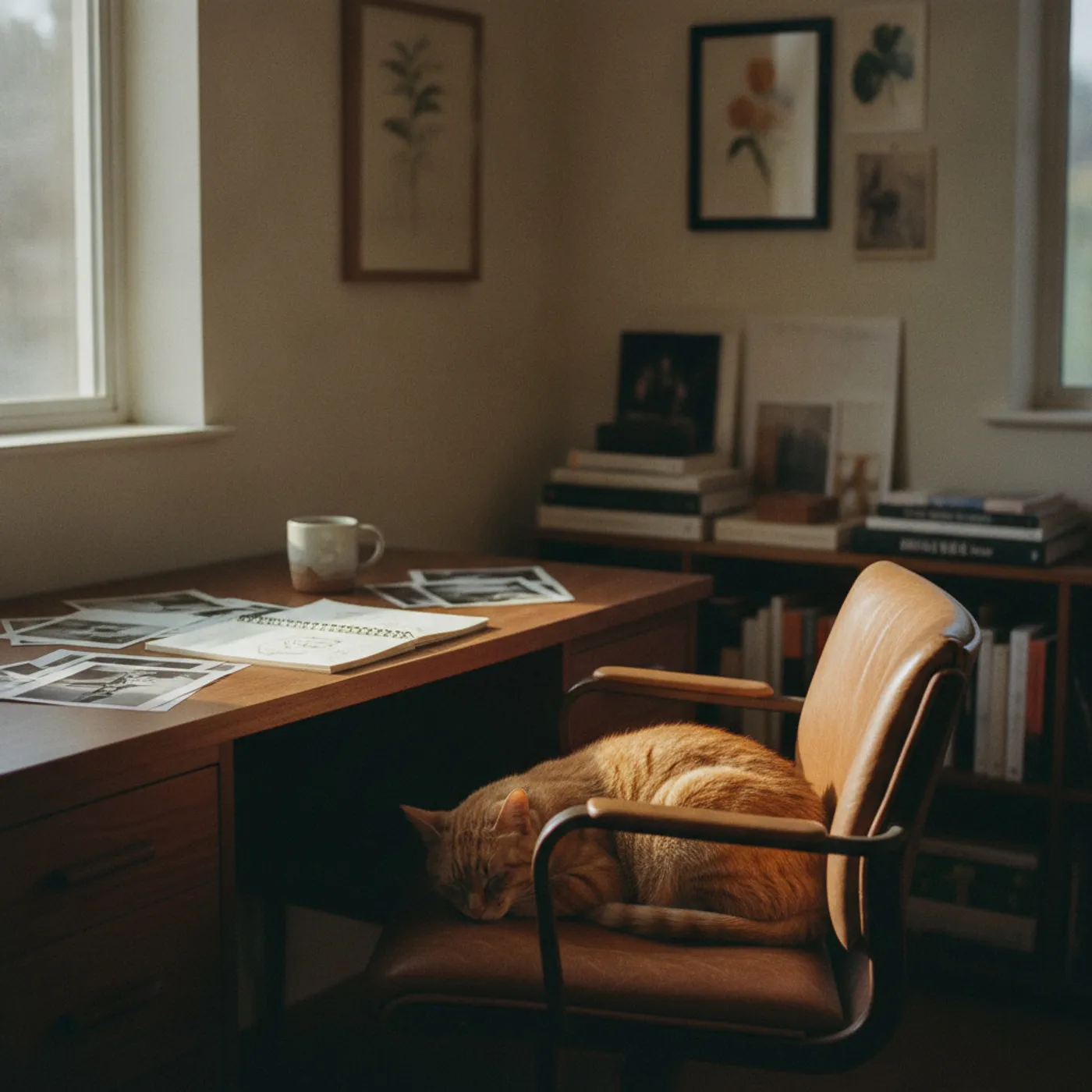
I recently read an interview with Hsieh Hsin-Yeh (“Xiao You”) of Studio Benshi, and one line stayed with me: Xiao You said that in the past, designing meant sitting at the computer for eight hours without moving, and even after clocking off came insomnia, with serotonin needed just to fall asleep. Later, Xiao You took in more than a dozen stray cats, and having to look after them morning and night brought a regular routine. The insomnia improved as a result. The story struck a chord, because it points to a problem shared across our whole industry: how do creative people actually manage their own energy?
Street Foraging: The Most Underrated Way to Recharge Inspiration
Another of Xiao You’s habits is “foraging”: using a phone to photograph street details, sorting and archiving them, even making special trips to second-tier Japanese cities just to wander the back alleys. It is not a new method, and plenty of people ask: is scrolling through Pinterest not faster? In my experience, the texture, light, and proportion of a real physical space simply cannot be conveyed through a screen. That is especially true when renovating an old flat or designing a neighbourhood shop (the flaws in a plastered wall, the rust colour on an iron window grille): those “imperfections” are the soul of old districts in Taiwan and Hong Kong alike. Our team runs a “street photography day” every couple of months: everyone is limited to 20 shots, and back at the studio we each pick five to share and discuss. The habit forces us to actually notice detail, rather than just snapping and forgetting.
Cat Therapy vs. Pet-Friendly Design: An Objective Look
Xiao You says the cats help reset mental rhythm, and I believe it completely. But as designers, we also need to remind clients that keeping a pet alongside a renovation brings many practical considerations to weigh.
That said, working pet-related elements into a space is not purely a functional question either. Take Studio Benshi’s own cat door: the cut-out has become a design feature in its own right. What matters most is thinking through the household’s daily flow ahead of time, rather than moving in and only then realising there is nowhere to put the food bowl.
Balancing Creativity and Life: There is No Perfect Design Process
Some people imagine designers as free-spirited artists, but the reality is we are dealing with deadlines, clients, contractors, and structural constraints all at once. Xiao You describes it as being “forced to grow up.” That really resonates. When a studio’s scale jumps from small shops to hotels and airlines, the management pressure operates on a completely different level. My own approach is to swap the digital dopamine hit for a physical notebook: before finishing work each day, I write down three things I learned, not a to-do list. That small habit helps turn scattered inspiration into applicable knowledge, and it quiets a surprising amount of mental noise.
If you are facing a similar design dilemma, please talk to us about your ideas, whether that is making pet-friendly design work without sacrificing style, or choosing materials with a clearer head. We are not trying to sell you anything here, just offering another angle to think from.
Discuss your space
Share your floor plan or photographs for a considered assessment of design possibilities, practical constraints and budget.