Reclaimed Timber Flooring: Environmental Value and Installation
How reclaimed wood flooring holds up in Hong Kong's humid climate: mould, warping, VOC risks, and real lifespan, examined objectively.
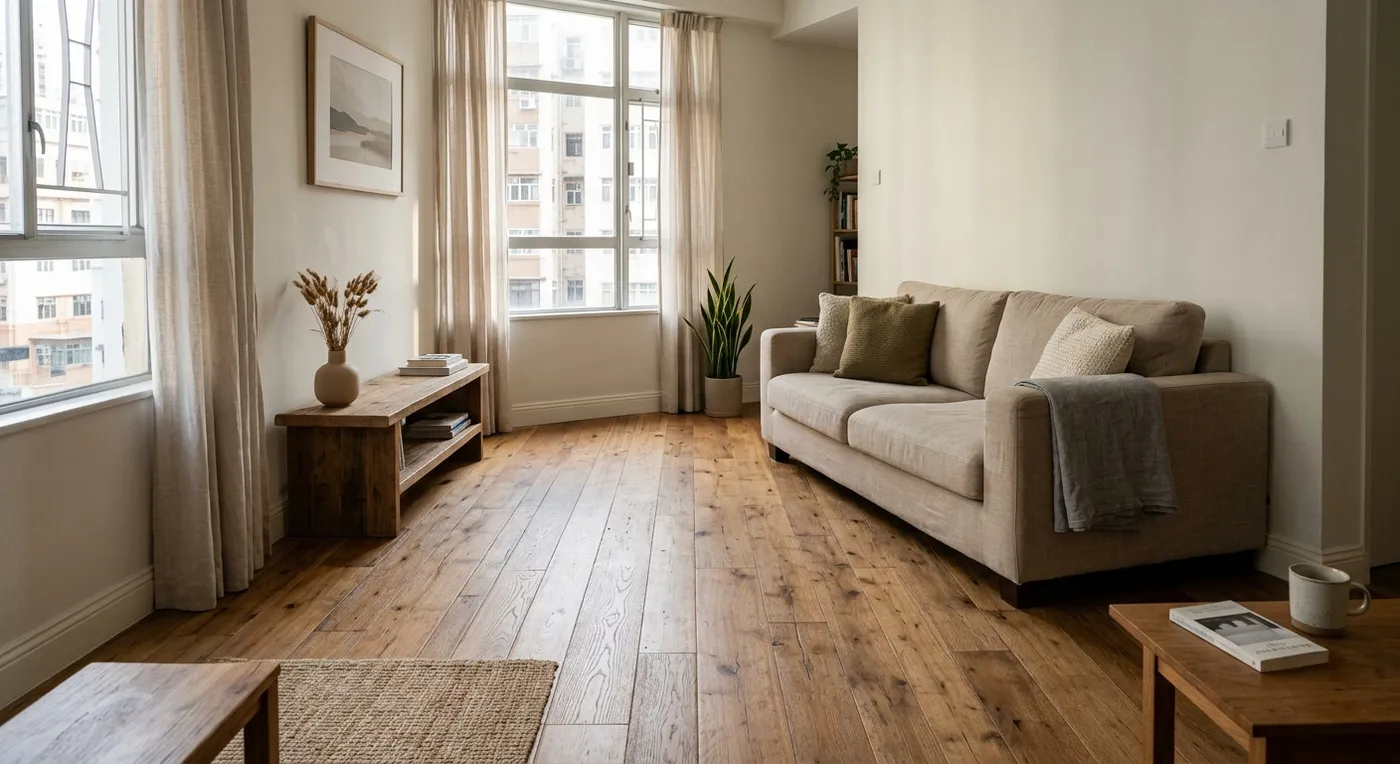
Environmental awareness has been on the rise in recent years, and many clients ask me: “Is using reclaimed wood for flooring both stylish and eco-friendly?” Reclaimed materials genuinely have their merits, but as people in the trade, we are not going to just talk up the benefits while ignoring the practical limitations. This article takes an objective look at how reclaimed wood actually performs in Hong Kong homes.
The Real Advantages of Reclaimed Materials
Reclaimed sources (old ship timber, salvaged seawall wood, beams pulled from demolished buildings) cut down on fresh logging, and their grain is one of a kind, carrying visible traces of history. But here is the catch: every piece of reclaimed wood differs in moisture content, density, and preservative treatment, so each piece needs to be checked individually before installation. That matters even more in humid Hong Kong, where reclaimed wood is prone to mould, warping, and even termite infestation.
If you are set on using reclaimed wood, we would recommend prioritising pieces that have already been kiln-dried, and laying a vapor barrier underneath. Also, do not assume “natural” automatically means “formaldehyde-free”: if the timber was previously treated with glue or paint, it can still off-gas VOCs even after refinishing. Always source from a supplier who can back it up with proper testing reports.
Rather than chasing “eco-friendly” as a buzzword, look at actual lifespan instead: a good new solid wood floor can generally last around 30 years, and reclaimed wood, if properly maintained, can go 20-plus, depending on the timber and the conditions of use. Real sustainability is about something that lasts, not just something that photographs well. If you are weighing a similar decision, please talk to us about your ideas.
Discuss your space
Share your floor plan or photographs for a considered assessment of design possibilities, practical constraints and budget.