Warm, Sustainable Hong Kong Homes: Materials and Planning
Canadian designer Gillian Gillies' warm approach to sustainable design frames a look at natural materials, ventilation, and light suited to humid, low-ceiling Hong Kong homes.
Mention sustainable design to most people in Hong Kong, and they immediately picture solar panels, insulated glazing, or one of those clinical “green building” show flats. But genuine sustainable design does not have to be engineering-led, and it does not have to come at the cost of how a home actually feels to live in. Canadian designer Gillian Gillies, in a project in Toronto, reframed sustainable design as a “warm embrace”: the focus being comfort, natural materials, and connection with family. That idea works just as well in space-starved Hong Kong, provided you adapt it to local conditions and steer clear of a few common misconceptions.
The Hong Kong Reality of Sustainable Materials
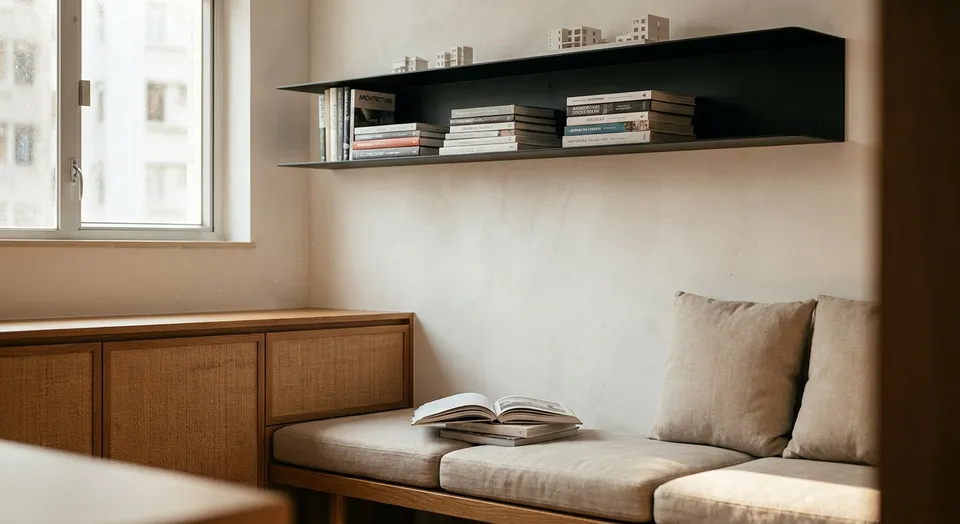
Hong Kong’s climate is humid, its ceilings are low, and its flats are small, so imported Passive House principles (extreme airtightness and high-efficiency insulation, for instance) need to be applied with caution. Over-sealing a home here can actually backfire, causing poor ventilation and trapped moisture that leads to mould. What we recommend instead is using natural materials (white oak, walnut, wool) to help regulate indoor humidity, paired with a mechanical ventilation system such as a heat-recovery unit, so you capture the spirit of Passive House without rigidly following every rule.
A common misconception in Hong Kong is assuming that “natural material” automatically means “harmless.”
Beyond material choice, colour and light matter just as much. Gillies leaned heavily on muted tones and warm lighting in her project, avoiding the “hospital white” that so much sustainable design defaults to. For Hong Kong flats with limited natural light, the same principle applies: a matte finish paint with a touch of sheen (an eggshell finish, say) reflects light without glaring, and paired with a few well-placed LED spotlights, it builds up a real sense of depth.
A “Warm Embrace” Within Real Structural Limits
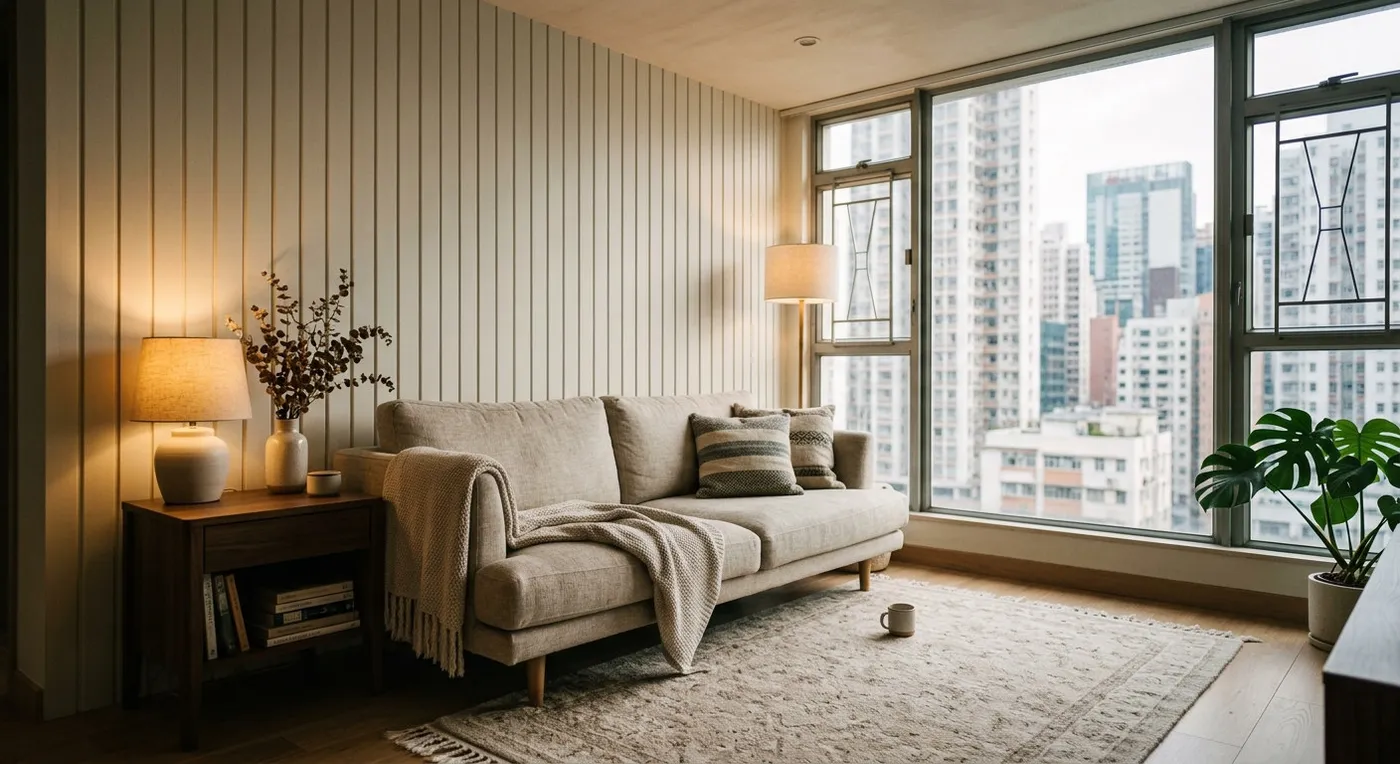
Hong Kong ceilings typically sit at 8 feet, nowhere near the soaring double-height spaces you see abroad. That is not something to worry about: put the thought instead into material texture and furniture proportions, and you can still create that sense of being held. A low-backed sofa, floor-length curtains that visually stretch the ceiling, vertical panelling on the walls: these all help. The underlying point is that sustainable design does not mean sacrificing style. It means making smarter trade-offs.
If you are facing a similar design dilemma, our team can help assess your options, and work out together the balance that best fits life in Hong Kong.
Discuss your space
Share your floor plan or photographs for a considered assessment of design possibilities, practical constraints and budget.