Charred Timber and Copper: Finishes, Ageing and Maintenance
A close look at how charred timber (shou sugi ban) and copper hold up structurally, maintain, and corrode in Hong Kong's hot, humid climate.
We have seen a lot of Nordic and Japanese design lately, and the pairing of charred timber (shou sugi ban) and copper is genuinely eye-catching. But the moment you try to bring that combination into a Hong Kong home, you run into a handful of physical constraints. This is not a sales pitch for the look. It is an honest account of what we at CLAY Interior have actually observed working with these materials. No talk of perfection, just the reality.
The Char in Charred Timber: Surface Treatment vs. Structural Stability
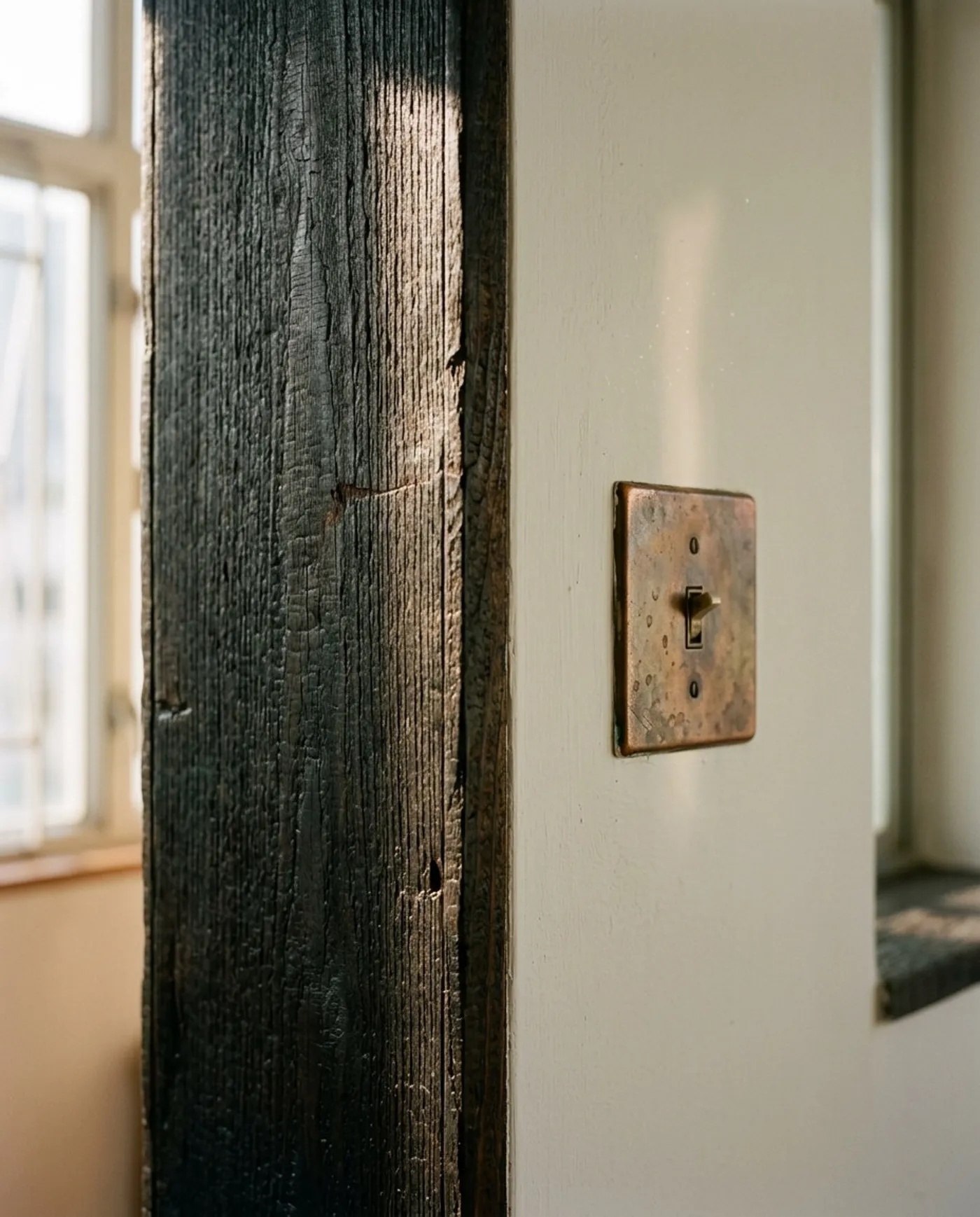
Charring timber scorches the surface to form a protective layer that resists rot and insects. But Hong Kong summers routinely sit above 80% humidity, and if the char layer is only thin, the solid wood underneath readily absorbs moisture, swells, and cracks. We have seen a few cases where cheap charred pine developed fine surface cracks within six months. Western red cedar or larch as the base timber, combined with the correct char depth (around 3 to 5mm) holds up far better against wide swings in humidity.
Copper: More Than Expensive, It Needs Care
Copper conducts heat quickly, so it feels cool to the touch, and in direct sun or near a heat source its surface can become noticeably hot. Use it for a kitchen worktop and you will have to live with the fact that a wet glass leaves a ring, since copper discolours readily on contact with water. If you love the material, we would suggest using it as an accent (light fixtures, door handles, skirting) rather than cladding a large surface in it. It is also worth knowing that copper in direct contact with other metals like stainless steel or aluminium triggers galvanic corrosion, so an insulating gasket needs to go in at every junction during installation.
At the end of the day, working with charred timber and copper means working with nature rather than against it: accept that the material will age and change, and it rewards you with a texture nothing else can replicate. But if what you are after is a look that stays identical for ten years, these two materials will probably disappoint you. Our approach at CLAY is to walk clients through the trade-offs first, then decide together where the real material earns its place and where a substitute (copper-look aluminium panelling, for instance) is the more practical choice.
If you are facing a similar design dilemma, our team can help assess your options.
Discuss your space
Share your floor plan or photographs for a considered assessment of design possibilities, practical constraints and budget.