Natural Materials in Hong Kong: Limestone, Clay and Hewn Stone
An objective breakdown of how limestone, natural clay plaster, and hand-chiselled stone actually perform, and how much upkeep each demands, in Hong Kong's high humidity.
We recently read about a Japanese-style home renovation by designer Taylor Hahn, who is himself half Japanese. Rather than stripping away the home’s existing atmosphere, his approach carried the original sensibility outdoors, turning even the hiking trail into “another room” of the house. That respect for a space’s existing materials and logic reminded us of a dilemma we see constantly in Hong Kong: owners who love the idea of limestone, natural clay plaster, and hand-chiselled stone, but worry about damp, mould, and how hard these materials are to maintain. So today, an objective look at how these three natural materials actually hold up in Hong Kong’s conditions.
Limestone: warmth and vulnerability in equal measure
Limestone has a warm texture, which is why overseas luxury homes use it so often for flooring or wall cladding. But in Hong Kong, high humidity combined with acid rain means limestone’s surface erodes easily, and its “pores” absorb stains: a spill of red wine or soy sauce is very hard to fully remove. It also needs regular sealing, or it effectively becomes a sponge. If you are set on using it, we would suggest limiting it to a feature wall or a partial floor area, and considering a honed rather than polished finish, since polished surfaces show scratches and etching more readily.
Natural clay plaster: the beauty of a breathing wall
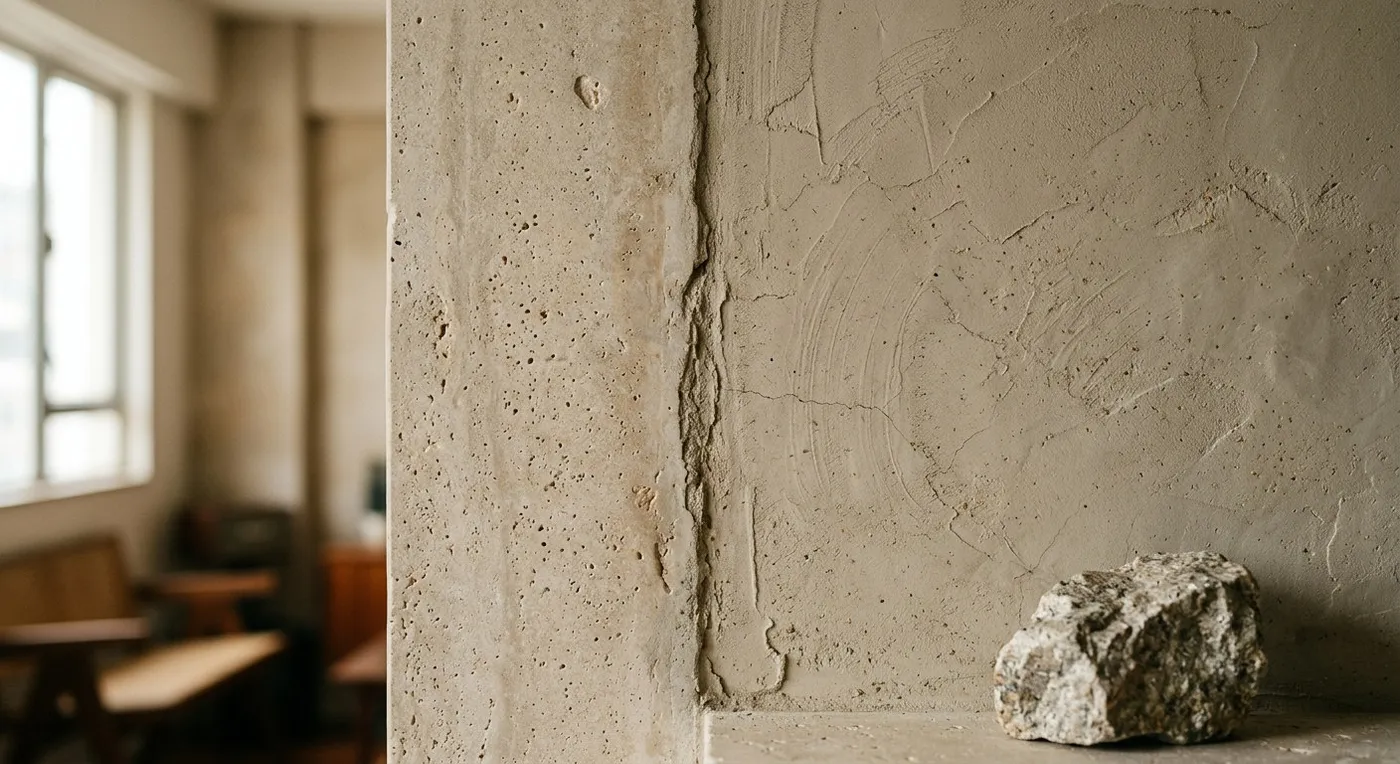
Clay plaster’s biggest selling point is that it “breathes”: it helps regulate indoor humidity and reduces condensation. But in practice, the barrier to entry is high: tradespeople in Hong Kong may be unfamiliar with it, and it is easy to end up with bubbling or cracking. It is also very soft: it chips and scratches on impact, and cannot be wiped with a damp cloth; you can only lightly vacuum or dry-dust it. Repairs mean stripping and re-plastering the whole wall, unlike paint, which you can simply touch up. It is best used on dry walls in a study or bedroom, away from kitchens and bathrooms.
Hand-chiselled stone: the price of craftsmanship
Every piece of hand-chiselled stone has its own texture, giving it a strong wabi-sabi character. But most Hong Kong flats are small, and using it across a large area can make a space feel heavy and cramped. It is also very heavy: an ordinary lightweight brick wall may not be able to support it without structural reinforcement beforehand, and a qualified professional should assess the wall’s load capacity before it is installed. It is also costly, depending on the stone and the craftsmanship. If you are drawn to it, we would suggest limiting it to an entrance feature wall or a TV feature wall, where it can work as a single visual focal point.
None of these natural materials is a perfect choice: each comes with its own upsides and downsides. What matters most is understanding your own habits and how much maintenance you are actually willing to tolerate before deciding which one to use. If you are wrestling with a similar design dilemma, please contact our team to discuss your requirements.
Discuss your space
Share your floor plan or photographs for a considered assessment of design possibilities, practical constraints and budget.